
When to Apply Pre-Emergent Weed Control in the Lehigh Valley
The Soil Temperature Rule
Pre-emergent herbicides work by creating a chemical barrier in the top inch of soil that prevents germinating seeds from establishing roots. The critical thing most homeowners don't know: they don't kill existing weeds — they only prevent germination. This means timing is everything.
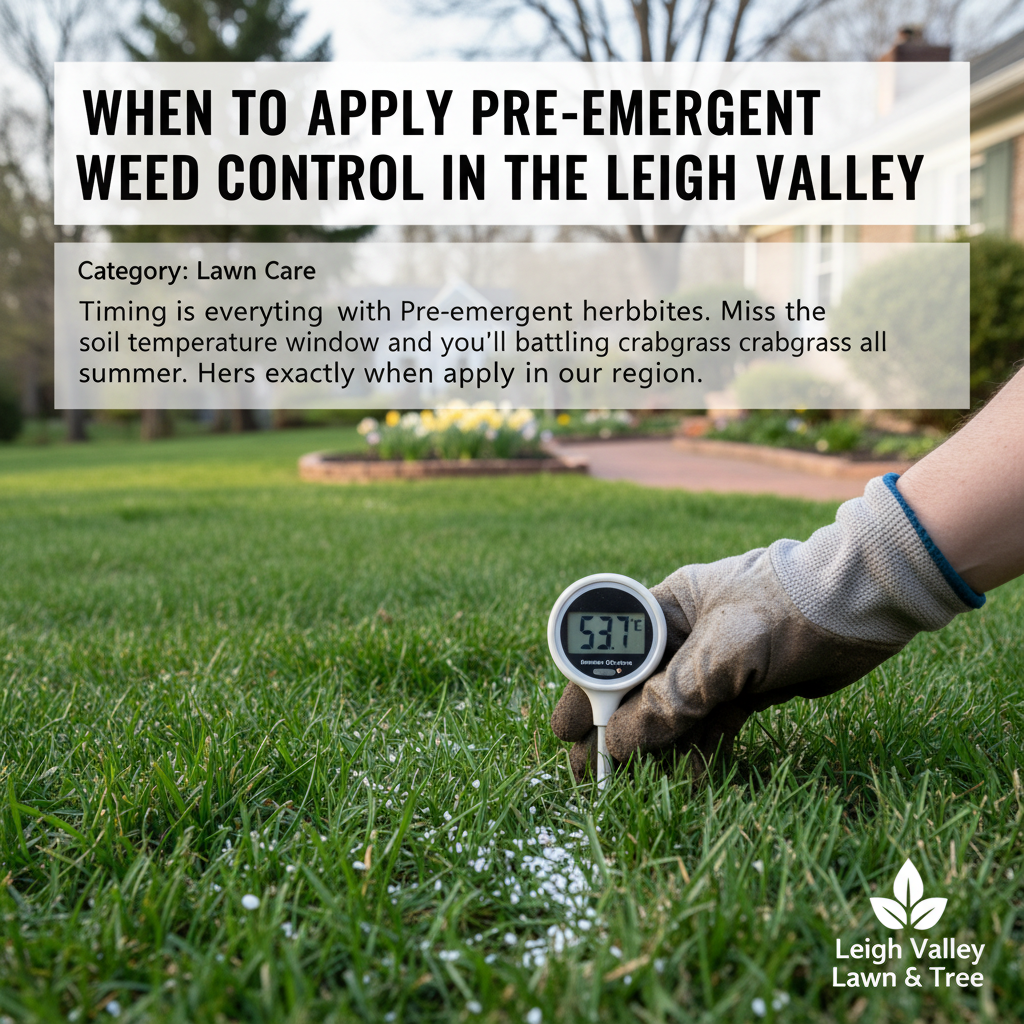
In the Lehigh Valley, crabgrass germinates when soil temperatures at a 2-inch depth reach 55°F for three or more consecutive days. Historically, this window falls between early April and late April, depending on the year.
How to Time It Correctly
Forget the calendar date — soil temperature is what matters. You can monitor soil temperatures at weather.com or through Penn State Extension's resources. A good rule of thumb: apply pre-emergent when forsythia blooms are dropping and dogwood blooms are opening. This natural phenological indicator aligns closely with the 55°F window in our area.
What Happens If You Miss the Window?
If soil temperatures have already passed 55°F, pre-emergent applications will not be effective for crabgrass. At that point, your options shift to post-emergent chemistry that targets young crabgrass before it tillers, or accepting the infestation and planning a fall renovation.
Broadleaf Weeds Are Different
Dandelions, clover, and other broadleaf perennials require post-emergent herbicides applied in spring (April–May) or fall (September–October). Fall applications are often more effective because broadleaf weeds are actively translocating nutrients to their roots — carrying the herbicide with them.
Our Recommendation
For most Lehigh Valley properties, we recommend a two-pass program: pre-emergent in early to mid-April (weather dependent), followed by a post-emergent broadleaf treatment in late May when temperatures are warm but not yet at summer stress levels.