
Tree Services
Trimming & Pruning
Do your trees have dead branches or are they blocking your view? Pruning keeps them healthy, safe, and beautiful—and it's one of the best investments you can make.
Why Should You Prune Your Trees Regularly?
Trees in urban and suburban landscapes face unique structural challenges that their forest counterparts don't. Isolated from competition, urban trees develop wide, heavy canopies with included bark, codominant stems, and long lateral branches — all structural defects that create failure risk over time.
ISA standards specify that all pruning cuts should be made to the branch collar — the swollen tissue at the base of a branch — to promote proper wound closure. Flush cuts, topping, and "hat-racking" are all harmful practices that leave large wounds, invite decay, and produce structurally weak regrowth. Our arborists follow ANSI A300 pruning standards on every project.
Types of Pruning We Perform
Each technique serves a specific purpose — our arborists will recommend the right combination for your trees.
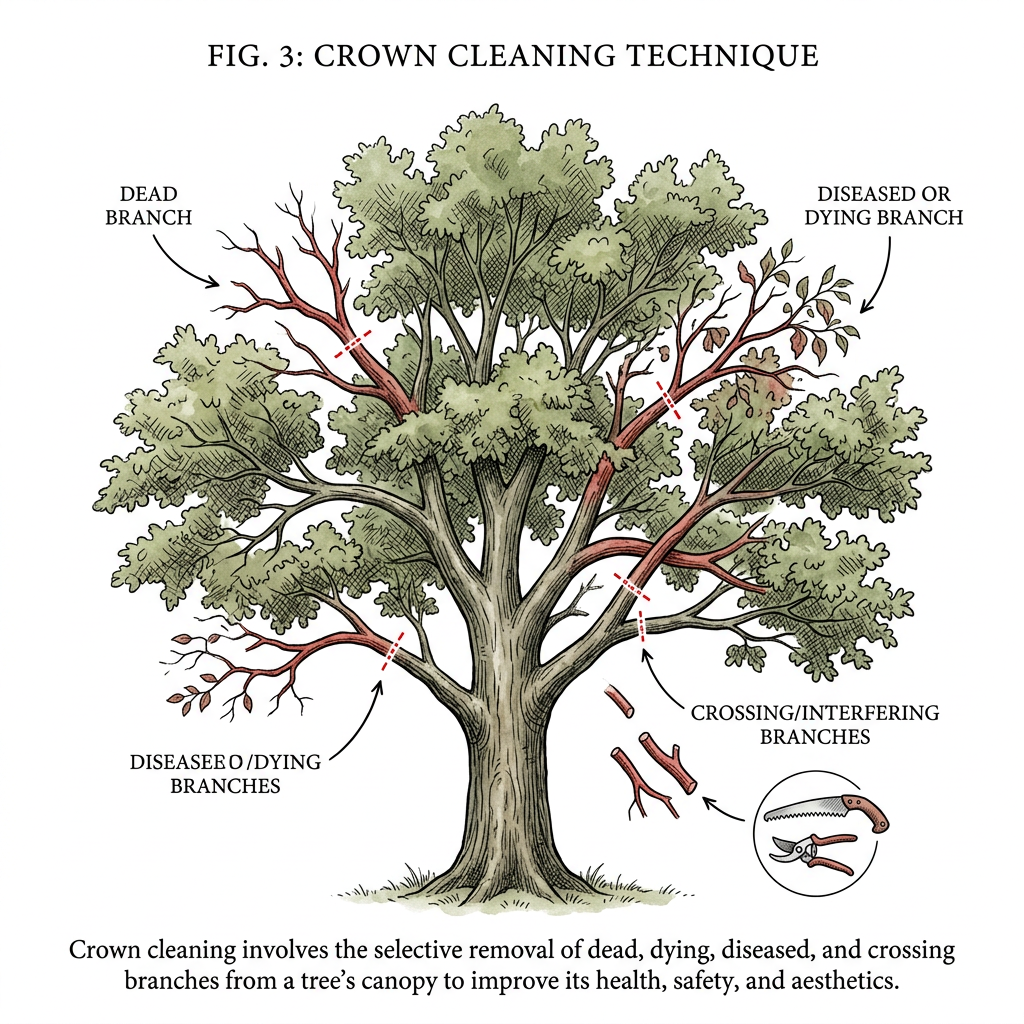
Crown Cleaning
Removal of dead, dying, diseased, and structurally defective branches. The most fundamental pruning operation — every tree benefits from it.
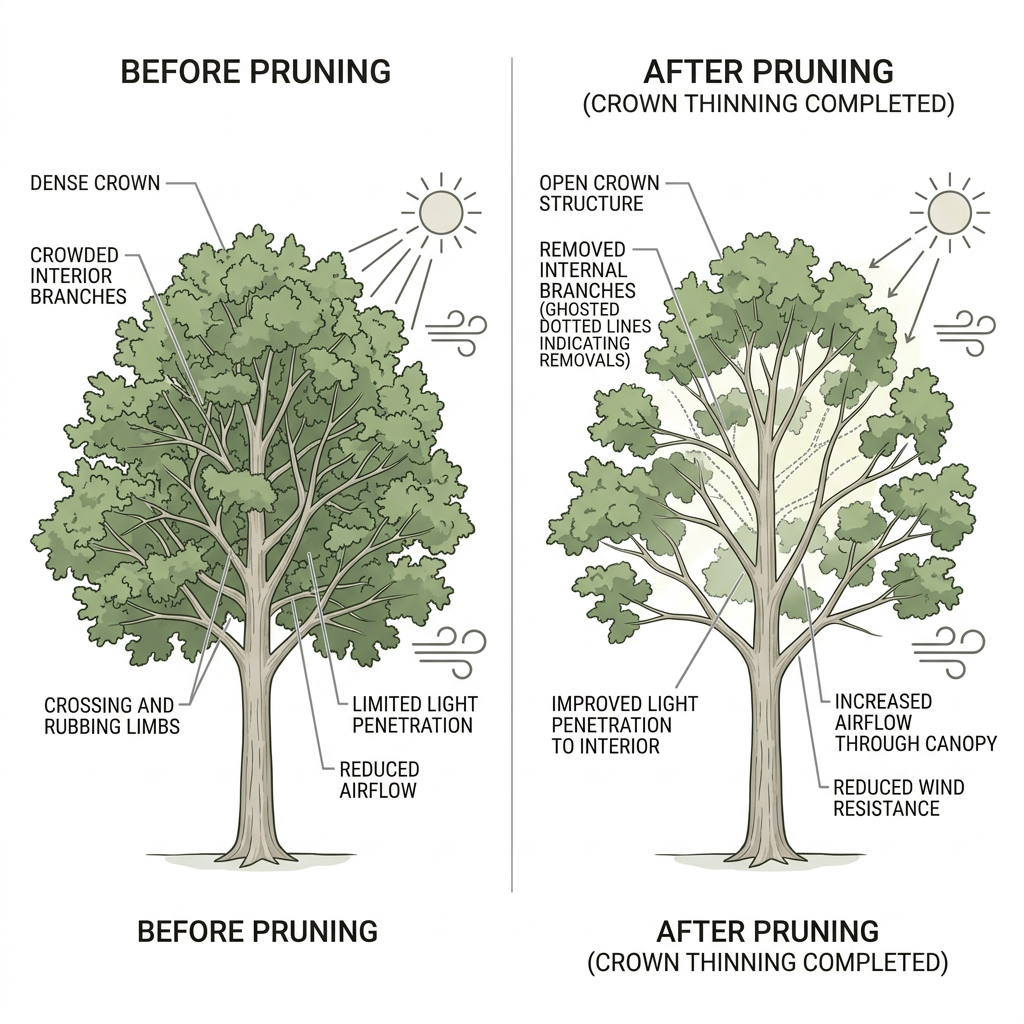
Crown Thinning
Selective removal of branches to increase light penetration and air movement. Reduces wind resistance without altering overall form.
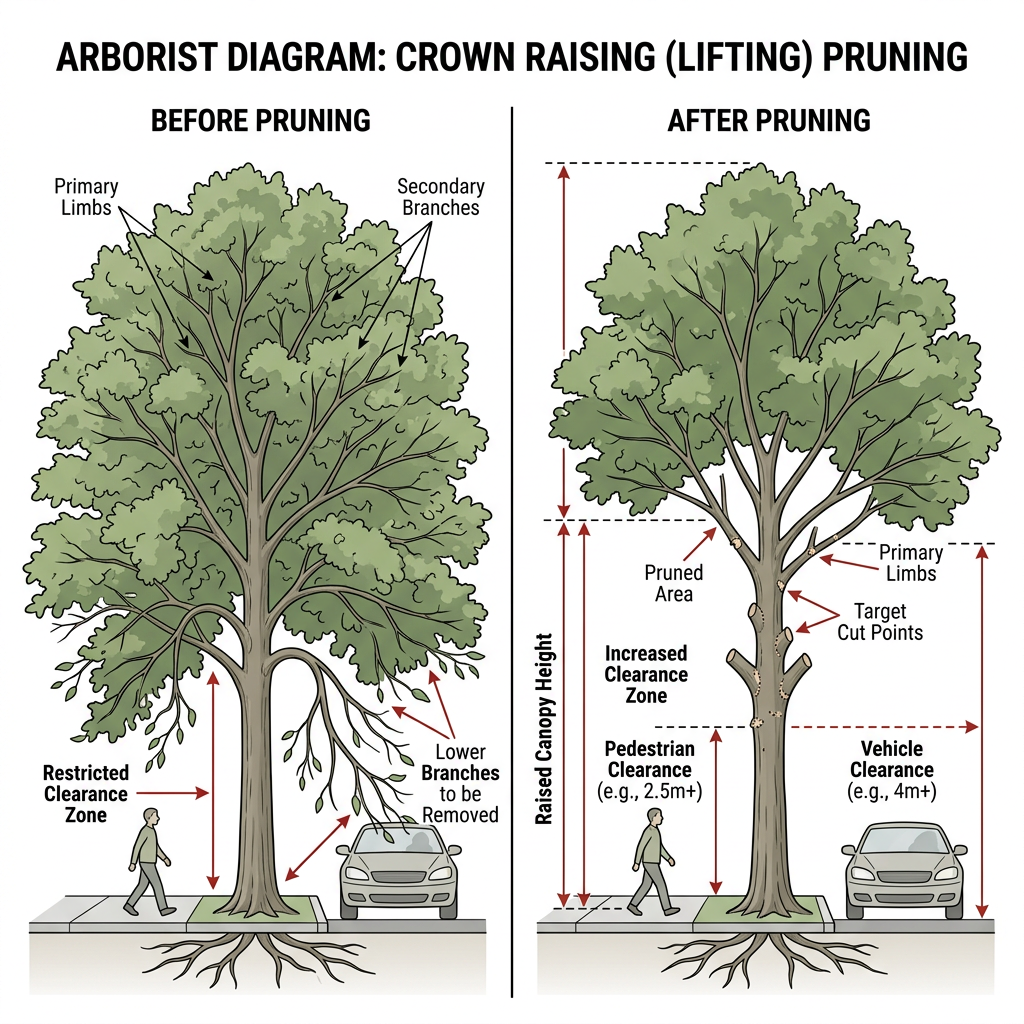
Crown Raising
Removing lower branches to provide clearance for pedestrians, vehicles, structures, or views. Performed gradually to avoid stress.
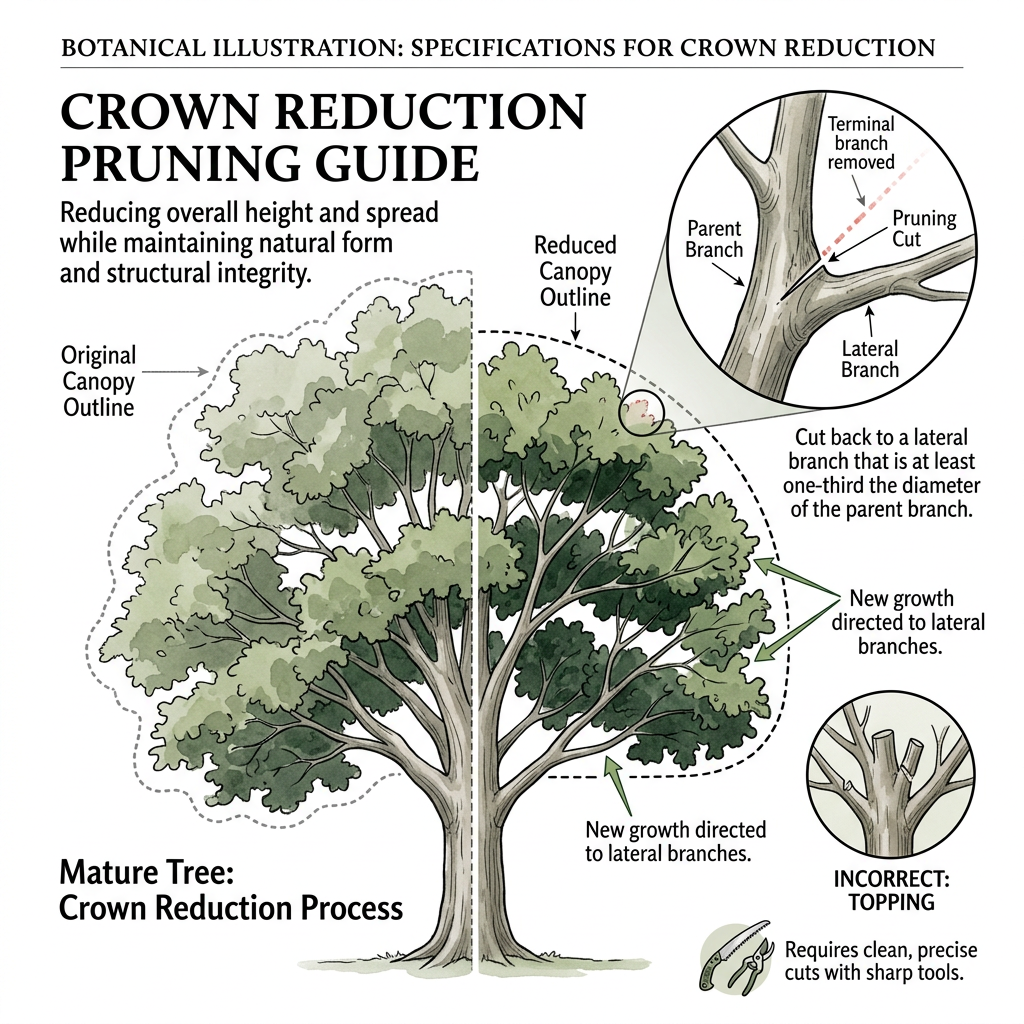
Crown Reduction
Reducing the overall size of the crown by pruning branch tips back to laterals. Used when trees have outgrown their site.
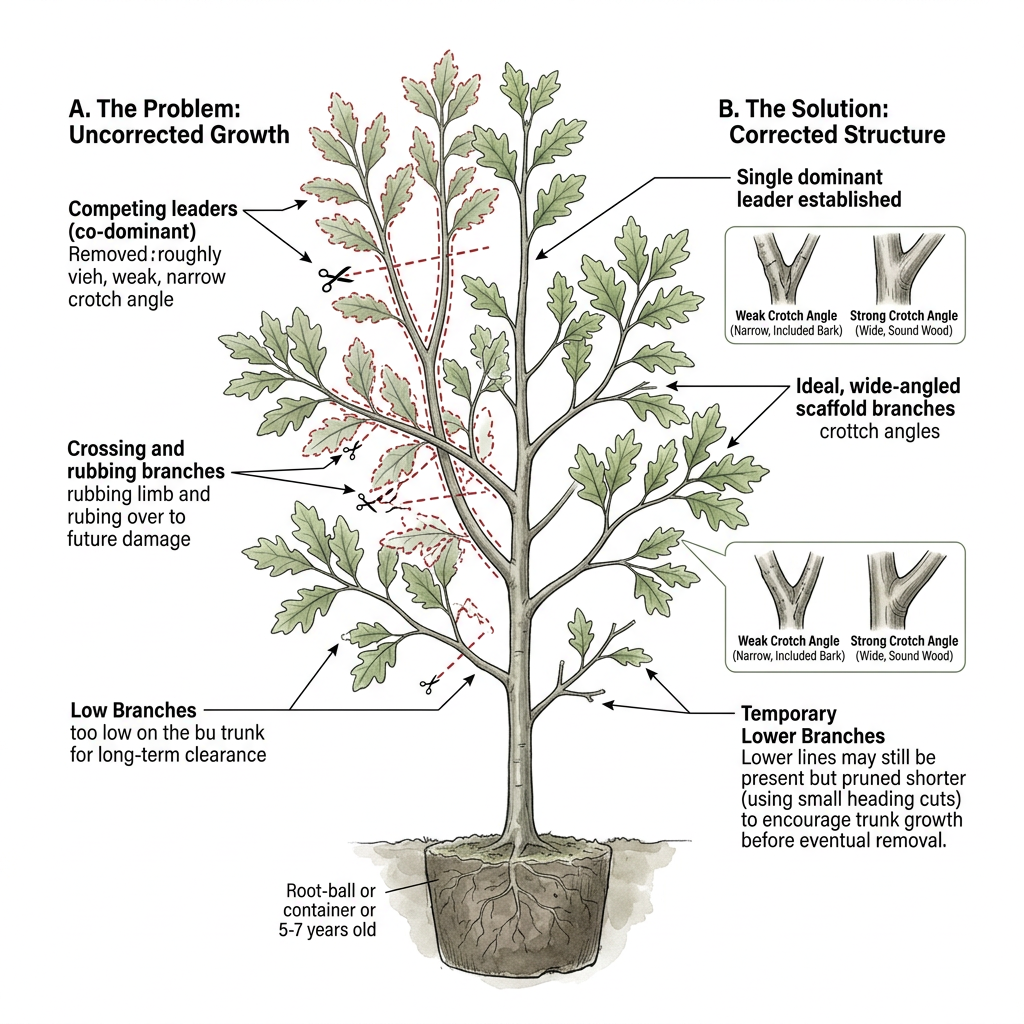
Structural Pruning
Developing proper branch architecture in young trees to prevent future defects. The most cost-effective investment in long-term tree health.
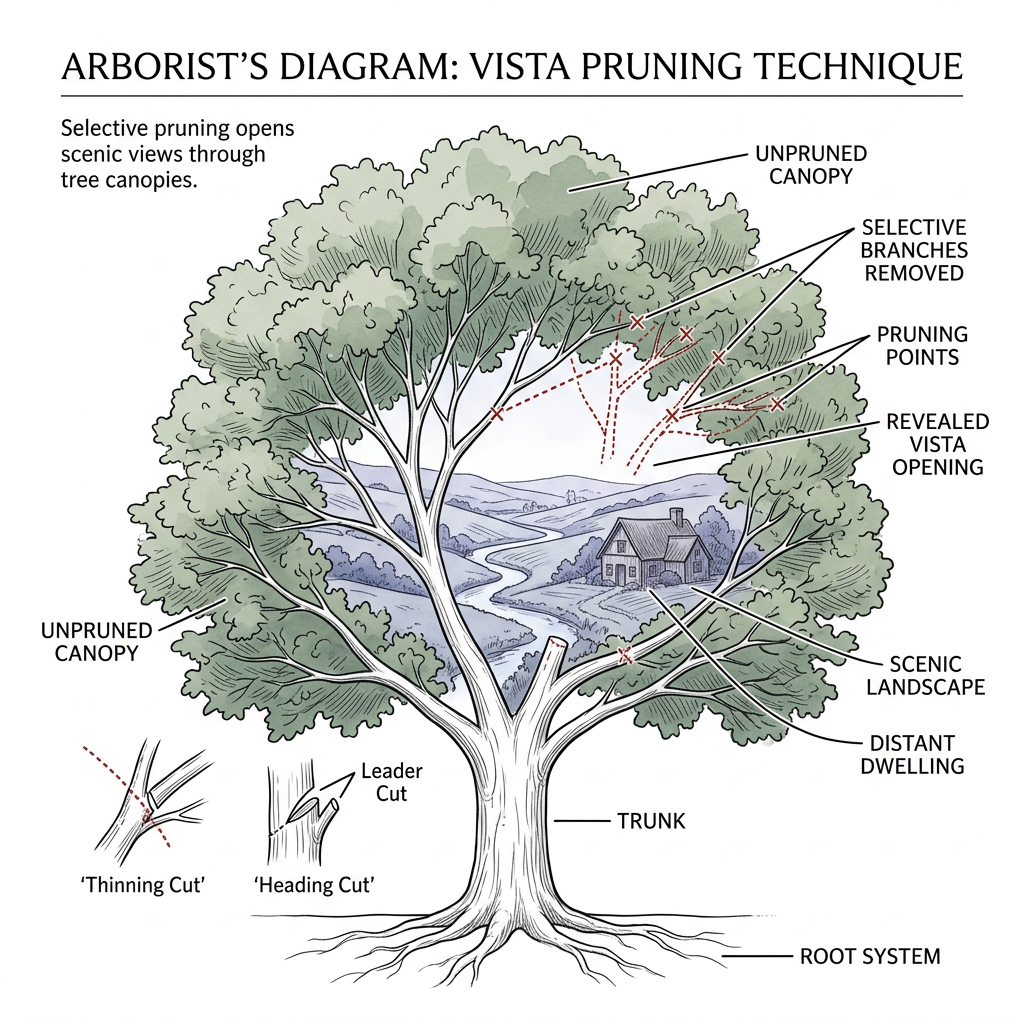
Vista Pruning
Selective thinning to open or enhance specific views without compromising tree structure or health.
Pruning Timing Guide
When you prune matters nearly as much as how you prune.
Late Winter
Best for: Most species
Ideal for most trees. Dormant pruning minimizes stress and disease exposure. Wounds close rapidly with spring growth flush.
Summer
Best for: Deadwood & hazard removal
Good time to identify and remove dead wood — clearly visible when surrounding foliage is present. Light thinning is also acceptable.
Fall
Best for: Avoid if possible
Pruning wounds heal slowly as trees enter dormancy. Exceptions include storm damage response and hazard removal.
Spring Flowering Trees
Best for: After bloom
Prune flowering ornamentals like dogwood, cherry, and crabapple immediately after flowers fade to preserve next year's bloom buds.