
Lawn Services
Aeration & Seeding
Is your lawn thin and bare in spots? Aeration and overseeding are the best way to thicken it up and fill in those problem areas.
Core Aeration
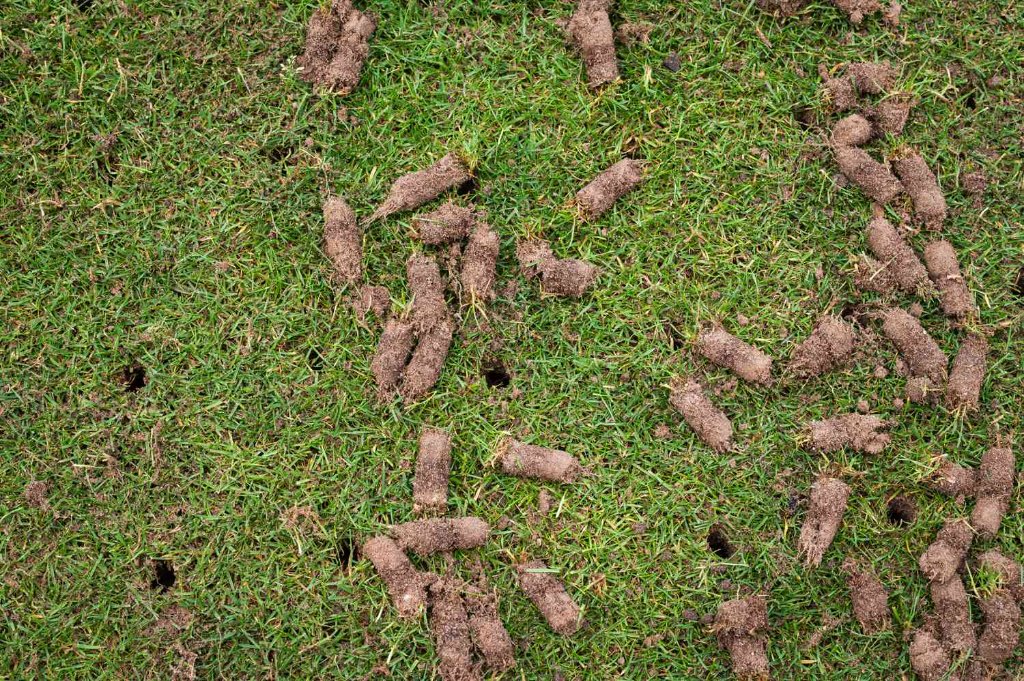
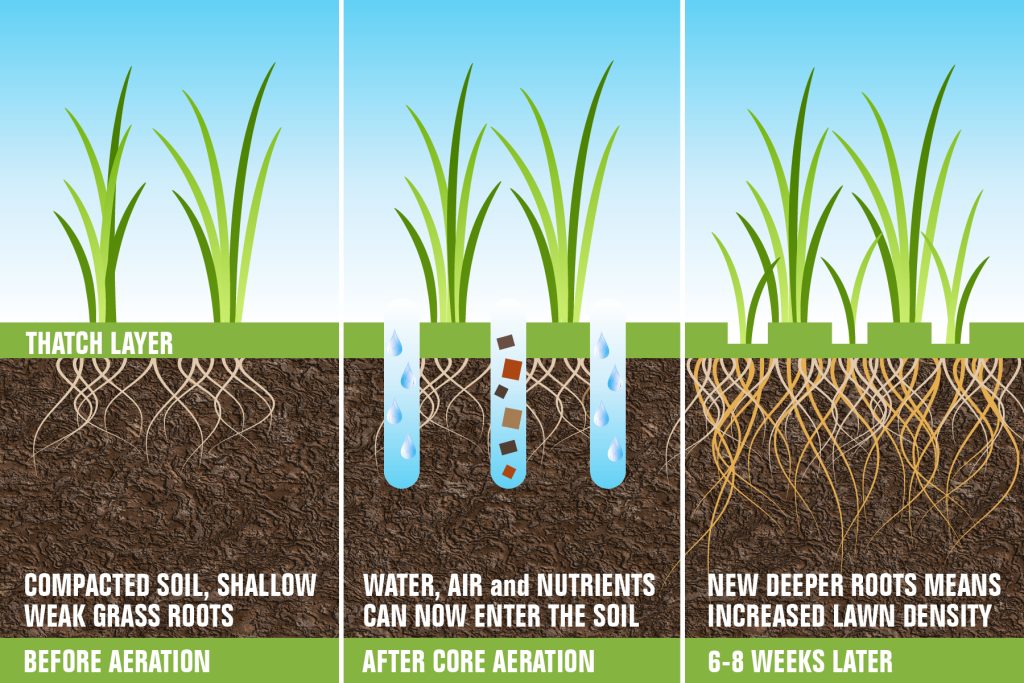
Core aeration involves removing thousands of small soil plugs from your lawn using a hollow-tine aerator. These cores are typically 0.5–0.75 inches in diameter and 2–4 inches deep. The holes they leave behind allow air, water, and fertilizer to penetrate deep into the root zone — bypassing the compacted layer that blocks them at the surface.
The extracted cores are left on the surface where they break down naturally over 2–3 weeks, returning organic matter and microbes to the turf. This process also stimulates root development and helps the turf self-repair over the following growing season.
Overseeding
Overseeding is the process of spreading grass seed directly over an existing lawn without removing the turf first. When done immediately after core aeration, seed falls into the open holes and has direct, protected contact with moist soil — dramatically improving germination rates versus seeding on a hard surface.
We select seed varieties specifically suited to your existing lawn — matching species, texture, and shade tolerance — so new growth blends seamlessly with established turf. For lawns needing major renovation, we can recommend a more aggressive overseeding program.
Frequently Asked Questions
When is the best time to aerate in the Lehigh Valley?
Late August through mid-October is ideal for cool-season grasses. The soil is warm enough for seed germination, and lower air temperatures reduce stress on new seedlings. Spring aeration is a secondary option but carries more weed risk.
How long should I stay off the lawn after aeration?
We recommend waiting at least 24 hours before walking on the lawn, and 2–3 weeks before heavy use. Mowing can resume after the new seed has germinated and reached a mowable height of about 3 inches.
How often should I aerate?
For most Lehigh Valley properties with moderate foot traffic, annual fall aeration is ideal. High-traffic areas or heavy clay soils may benefit from twice-annual treatment. We'll recommend the right frequency after evaluating your property.
Do I need to water after overseeding?
Yes — consistently. Newly seeded areas need to stay moist (not soaked) for the first 2–3 weeks. We'll give you a specific watering schedule based on your irrigation setup and the weather forecast.