Tree Services
Tree & Shrub Insect and Disease Management
Deep-root feeding, disease diagnosis, and structural pruning for the ornamental trees, plants, and hedges that define your landscape's character.
Below are a list of tree and shrub insects and diseases that are common in the Lehigh Valley
Common Tree & Shrub Diseases in the Lehigh Valley
Our region's climate and plant populations create specific disease pressures. Early detection and targeted treatment prevent property-wide losses.
Fungal Disease
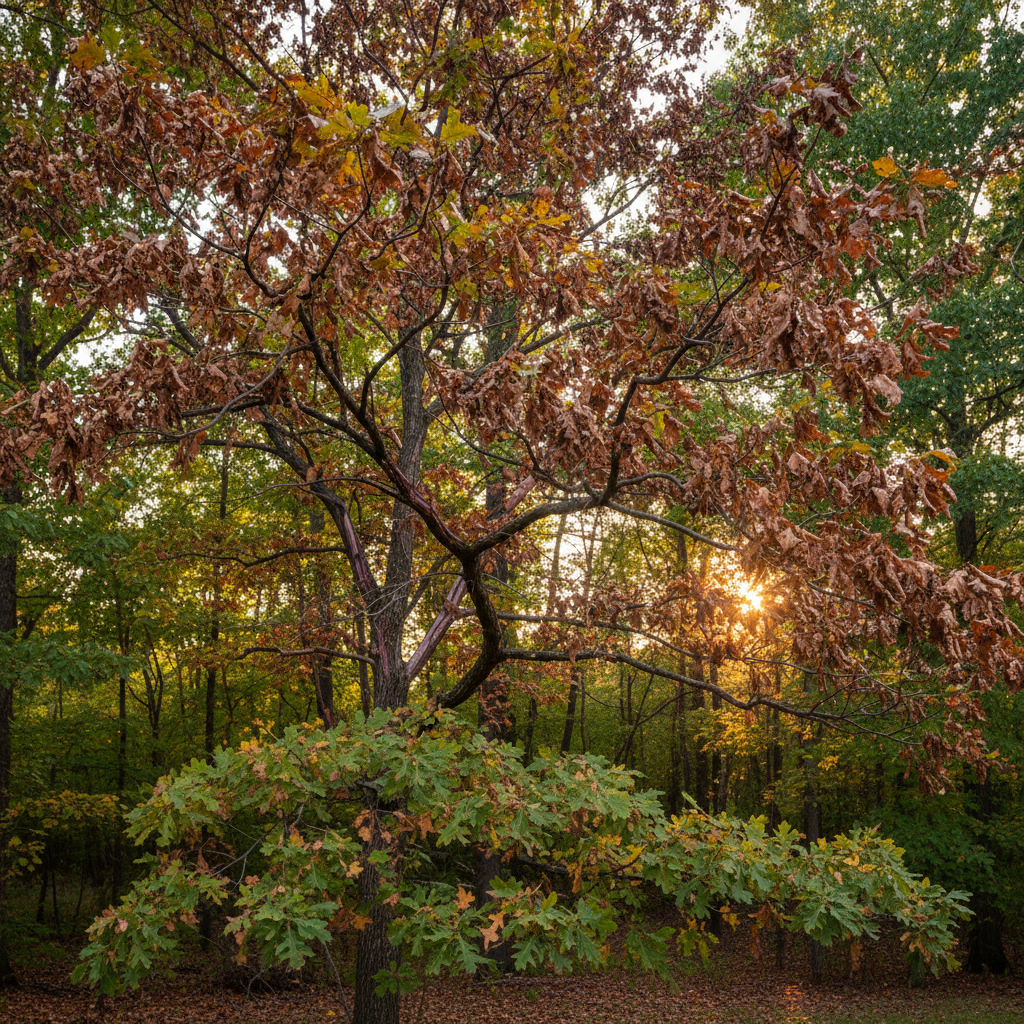
Oak Wilt
Red oaks can die within 4–6 weeks of infection. Rapid wilting from the top of the crown downward.
Treatment
Propiconazole trunk injection; root graft disruption to prevent spread.
Fungal Disease
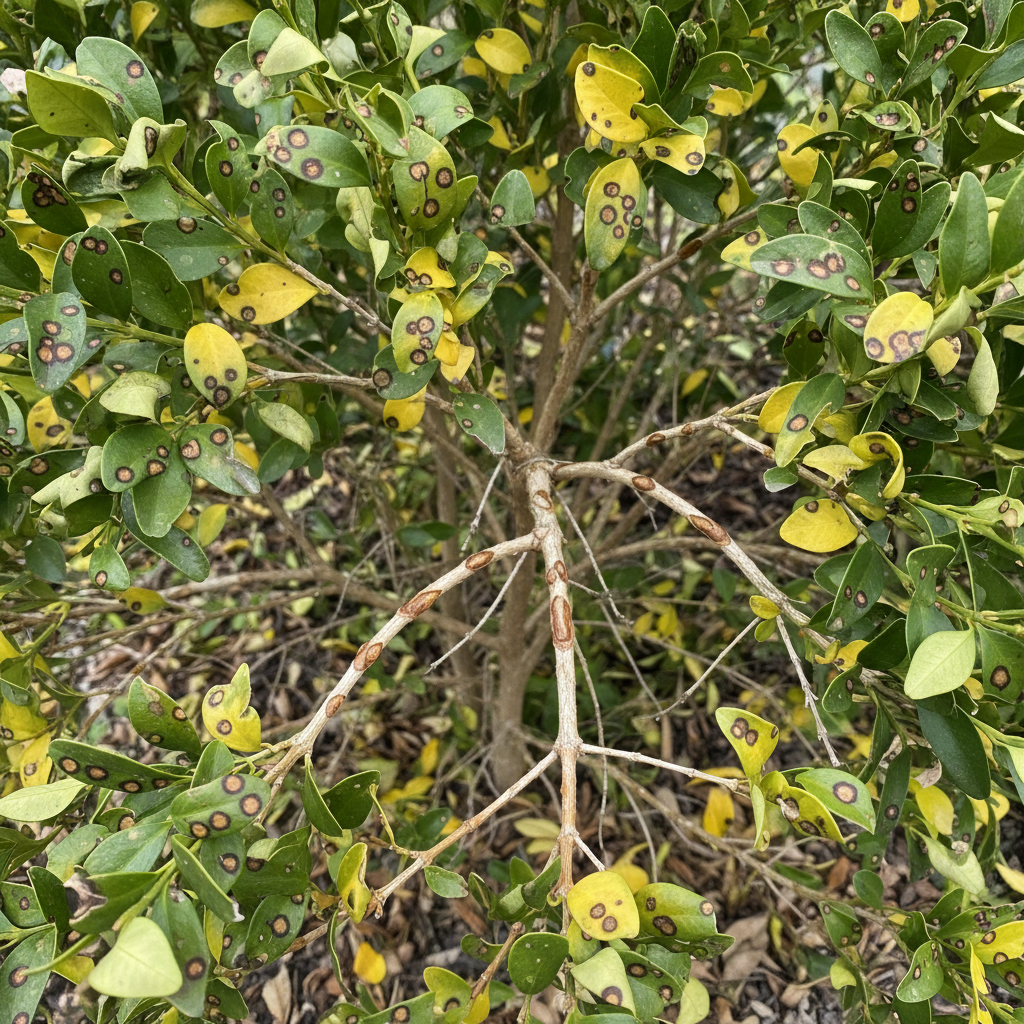
Boxwood Blight
Rapid leaf spot and defoliation, can kill plants in weeks
Treatment
Fungicide rotation, improved air circulation, plant removal if severe
Soilborne Disease
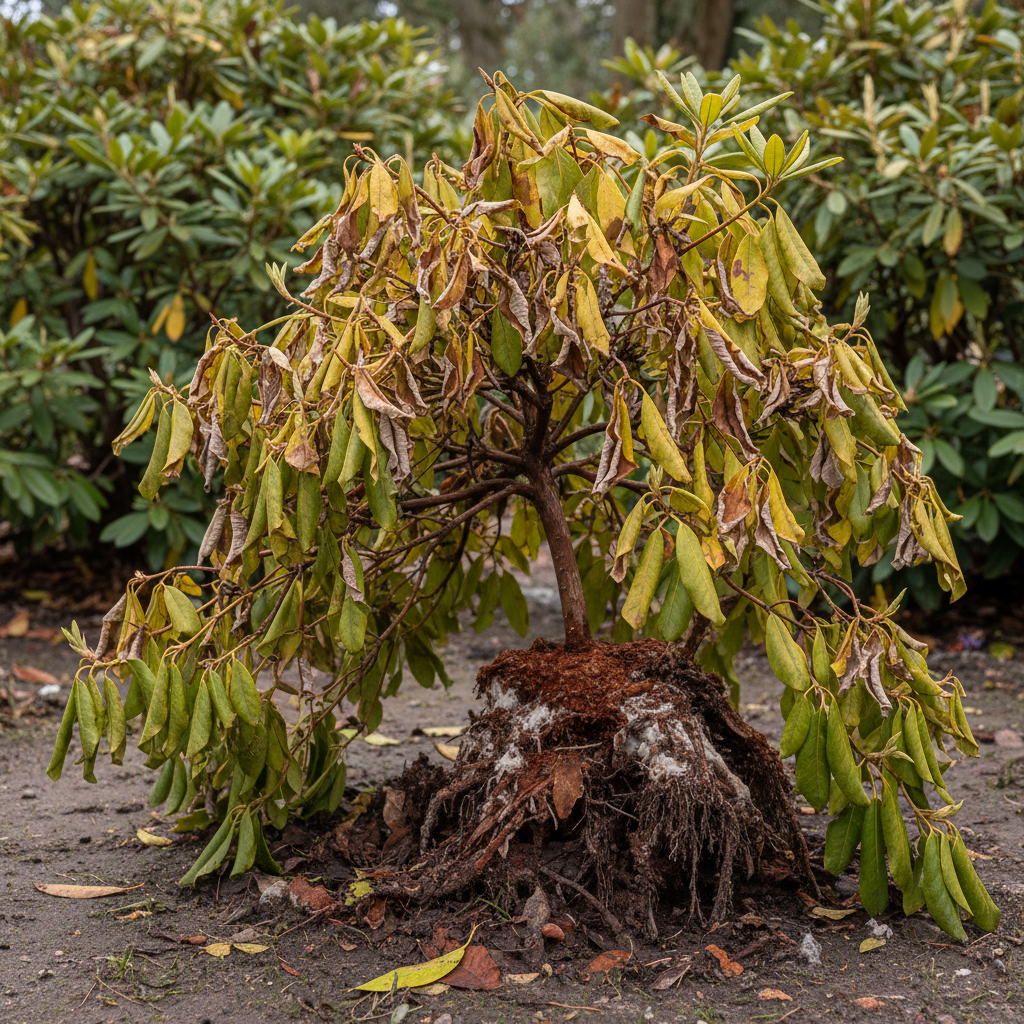
Phytophthora Root Rot
Root death in poorly drained soils, wilting and decline in rhododendrons, dogwoods, and conifers
Treatment
Improve drainage, phosphite fungicide, soil amendment
Bacterial Disease
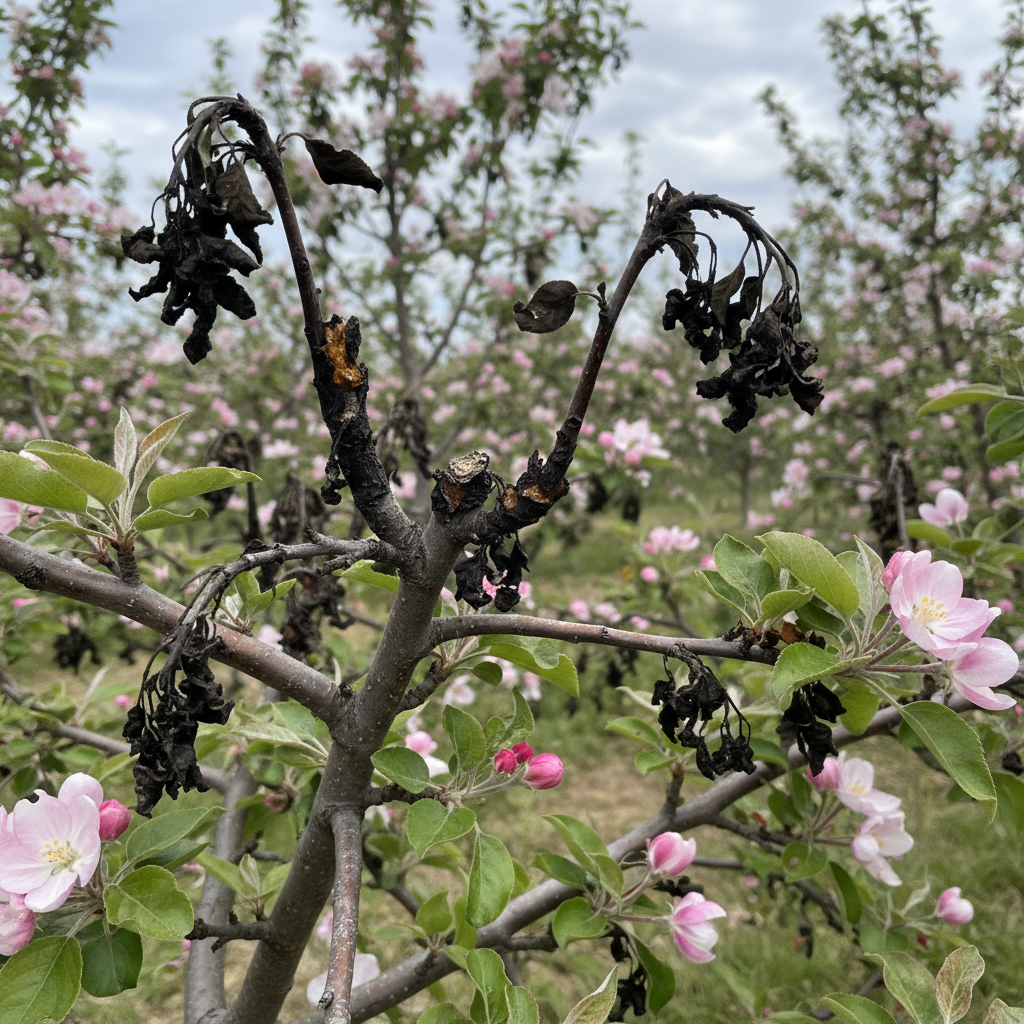
Fire Blight
"Shepherd's crook" wilted branch tips, blackened blossoms on crabapple, pear, hawthorn
Treatment
Prune 12" below visible margin; copper-based bactericides at bud break
Fungal Disease
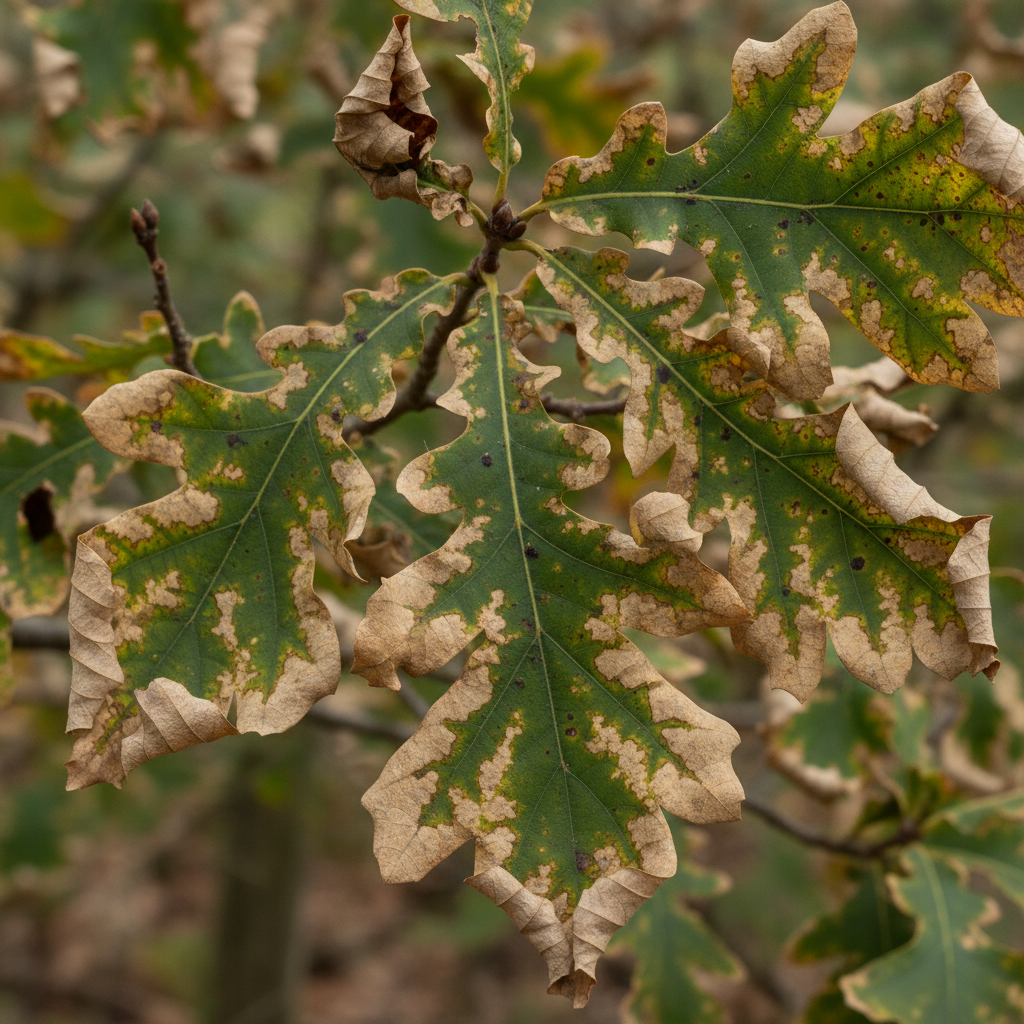
Anthracnose
Leaf spots with tan or brown margins, defoliation, twig dieback on sycamore, oak, maple, dogwood
Treatment
Selective pruning for air circulation, fall leaf litter removal, spring fungicide
Soilborne Disease
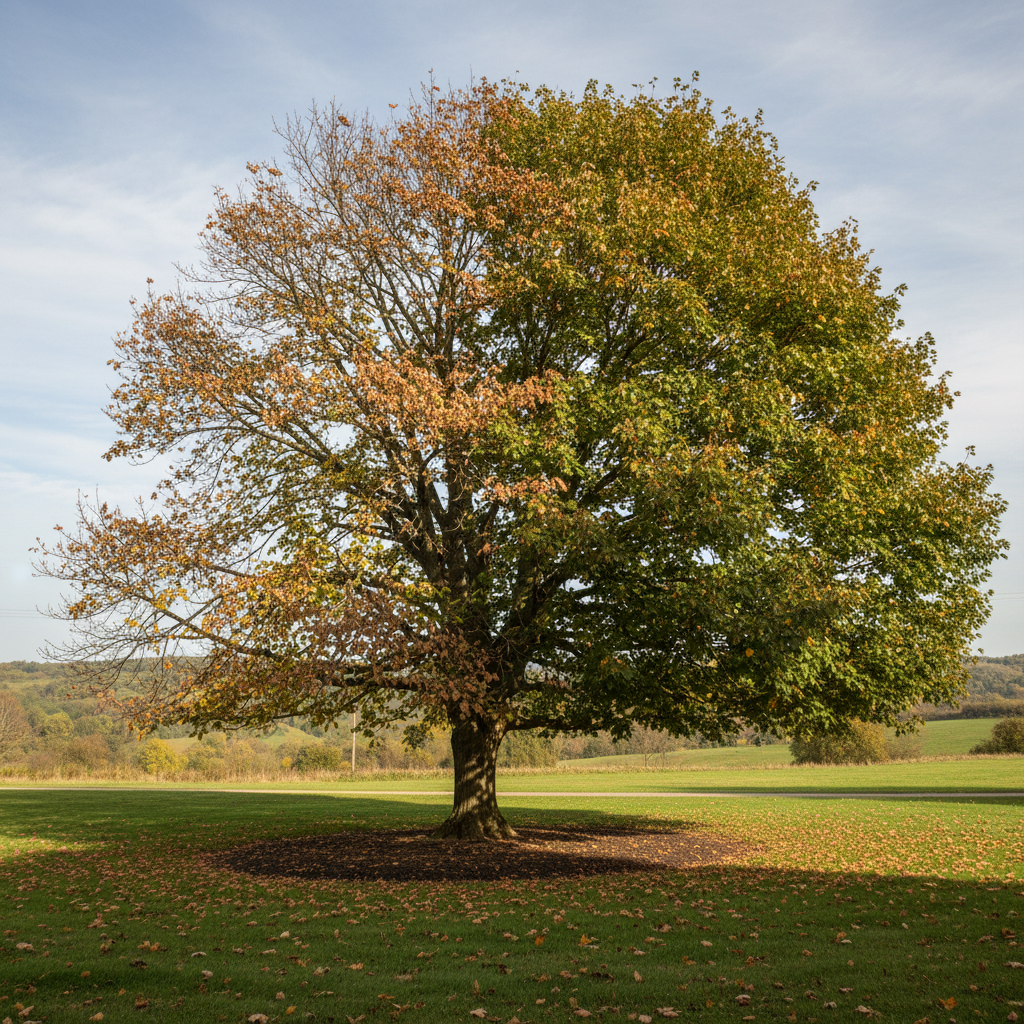
Verticillium Wilt
One-sided wilting and branch dieback in maples, dogwood, elm, and hickory
Treatment
Deep watering, organic mulch, balanced fertilization, prune wilted branches
Fungal Disease
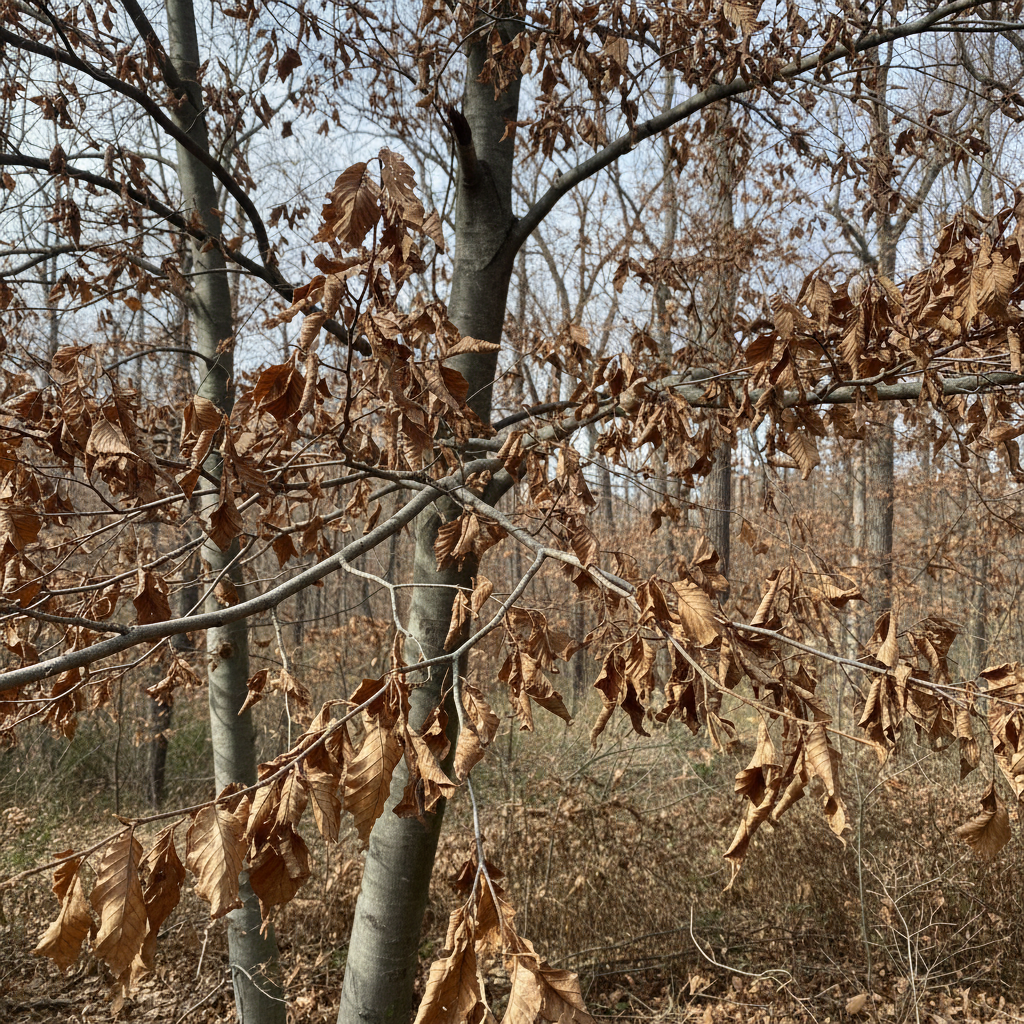
Beech Leaf Disease
Skeletonized leaves with brown areas between veins, severe defoliation, and canopy decline. Affects American beech and related species.
Treatment
Monitor beech trees closely for early detection. Improve tree vigor through deep watering and mulching. Prune affected branches. No chemical control currently available.
Fungal Disease
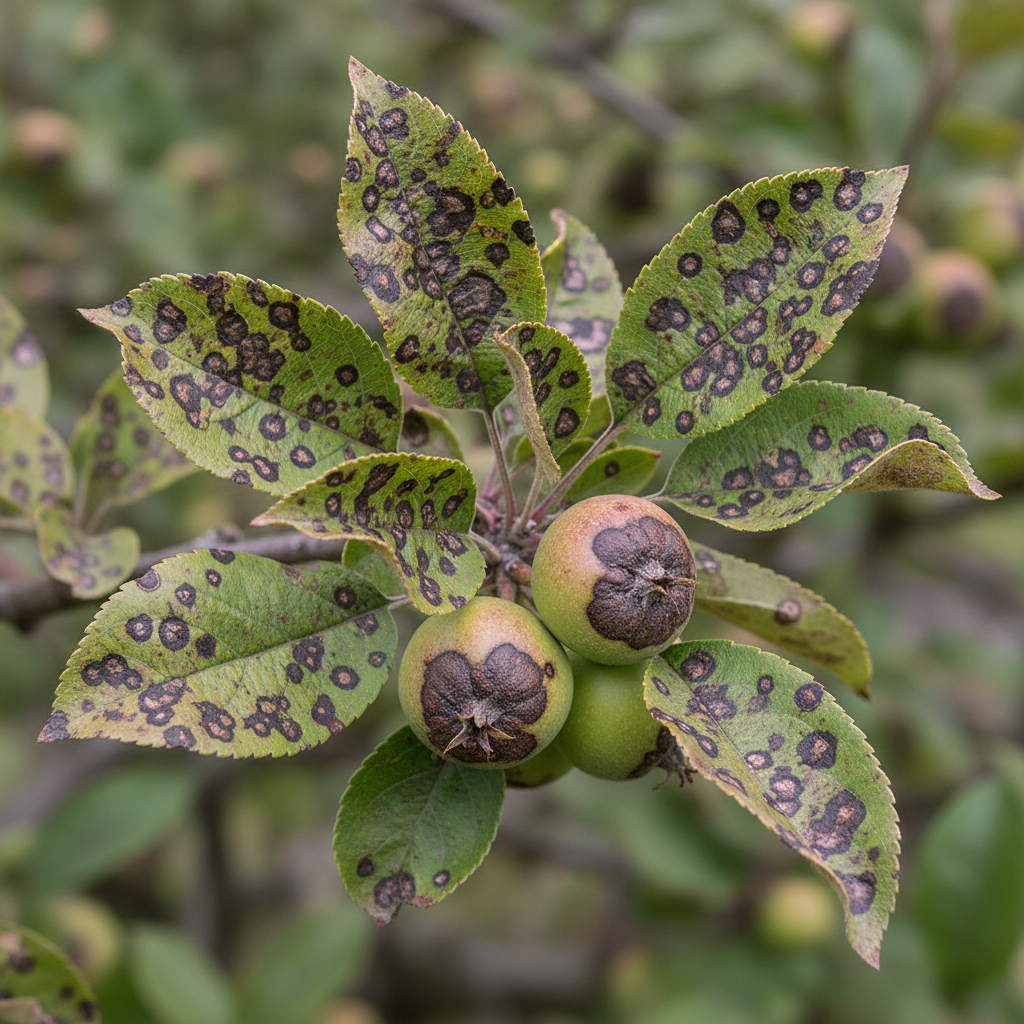
Apple Scab
Olive-brown spots on leaves and fruit, leaf yellowing and defoliation. Affects crabapple, apple, and hawthorn species.
Treatment
Remove infected leaves and fruit debris in fall. Apply fungicide at bud break and during wet spring weather. Improve air circulation through selective pruning.
Fungal Disease
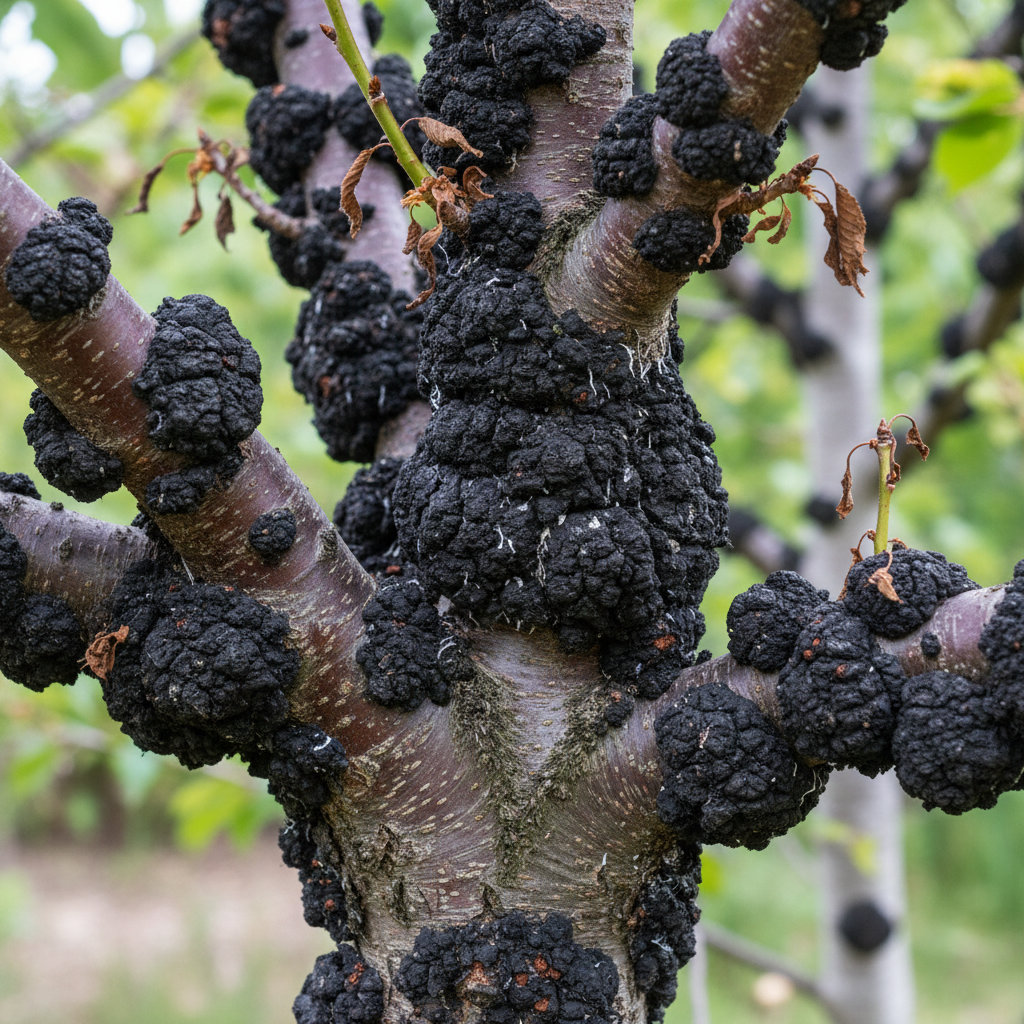
Black Knot
Dark black, warty fungal growths and knots on branches and trunk of cherry and plum trees. Cankers girdling branches, causing dieback beyond the infection point.
Treatment
Prune infected branches 6 inches below visible knots during winter dormancy. Remove and destroy all pruned material. Sterilize tools between cuts. No effective chemical control; prevention through pruning is key.
Bacterial Disease
Bacterial Leaf Scorch
Marginal leaf browning that progresses inward, resembling drought stress or heat scorch. Affects oaks, maples, elms, sycamores, and dogwoods. Symptoms worsen each year as the disease advances — there is no cure, only management.
Treatment
No curative treatment exists. Trunk injections of oxytetracycline (OTC) suppress symptoms and slow progression. Deep watering and mulching reduce stress. Prune dead branches and monitor annually.
Fungal Disease
Cedar-Apple Rust
Bright orange, gelatinous spore horns on eastern red cedar and juniper in spring; yellow-orange spots with tube-like structures on the undersides of apple, crabapple, and hawthorn leaves in summer. Causes premature defoliation and fruit spotting.
Treatment
Apply fungicide (myclobutanil or propiconazole) at bud break on susceptible apple and crabapple hosts through petal fall. Remove nearby eastern red cedar or juniper galls when feasible. Plant rust-resistant crabapple varieties for long-term prevention.
Common Tree & Shrub Insects in Eastern PA
Insects native and invasive to the Lehigh Valley that threaten residential trees and ornamental shrubs — with identification notes and treatment options.
Invasive Insect Pest
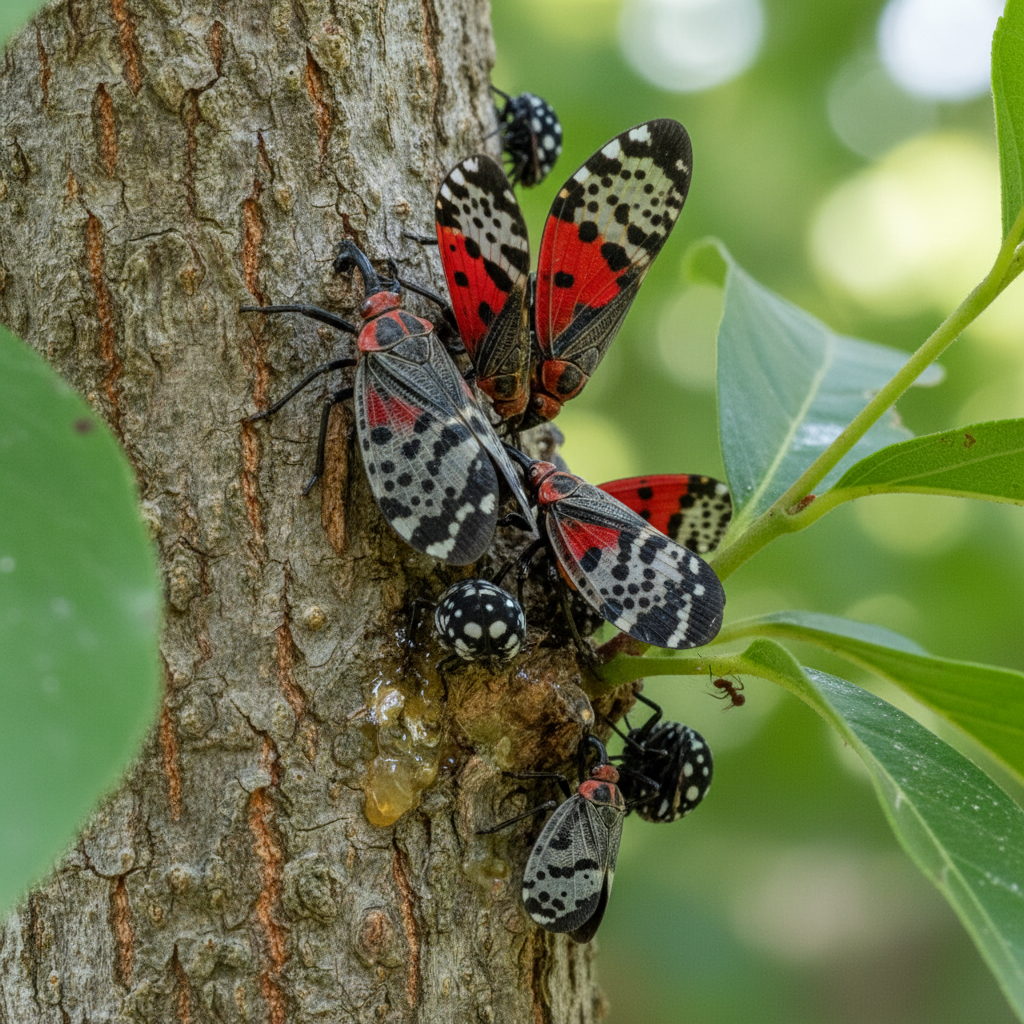
Spotted Lanternfly
Host Plants
Tree-of-heaven, maples, oaks, walnuts, fruit trees, grapes
An invasive planthopper native to Asia that has spread aggressively across eastern Pennsylvania. Feeds on phloem sap, weakening trees and leaving behind a sticky honeydew that promotes black sooty mold.
Treatment
Systemic insecticide applications (dinotefuran or imidacloprid) via trunk injection or soil drench. Scrape and destroy egg masses. Eliminate tree-of-heaven to reduce population pressure.
Sap-Feeding Insect
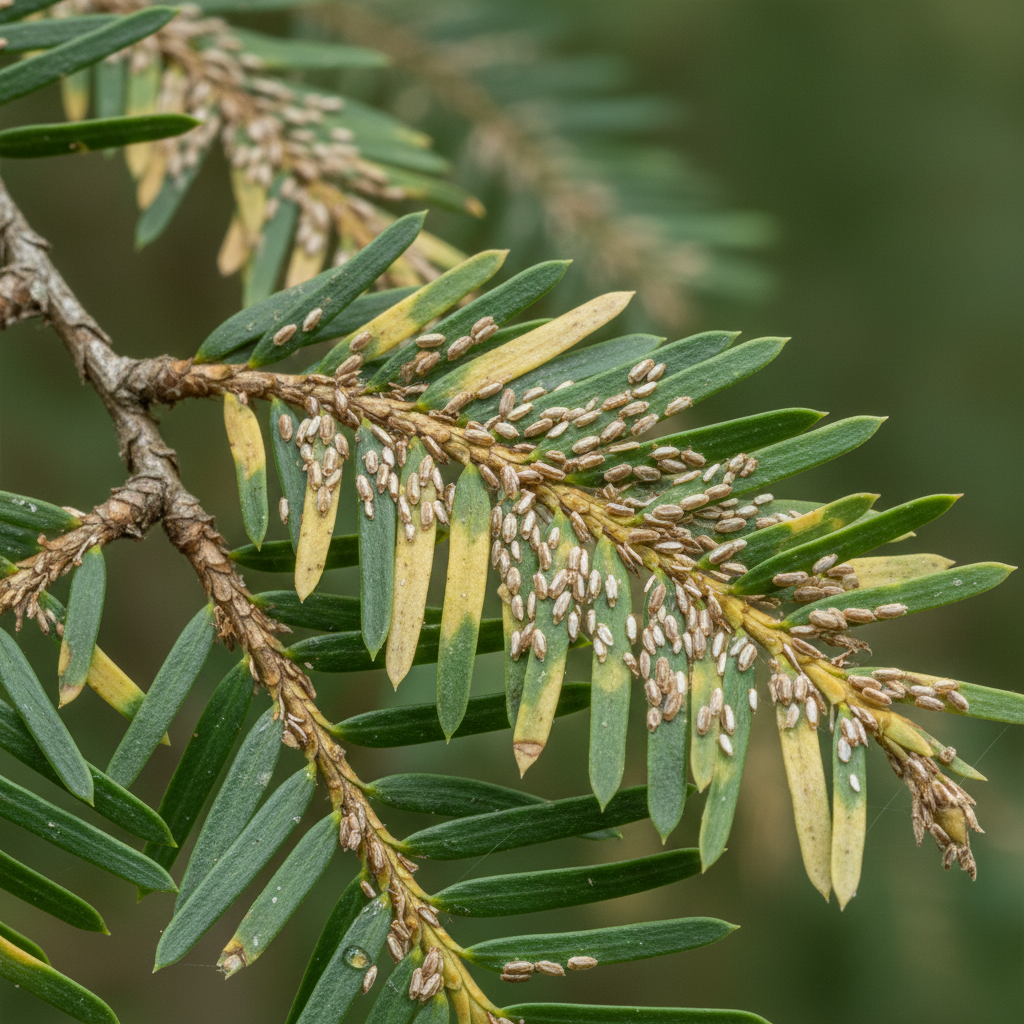
Elongate Hemlock Scale
Host Plants
Eastern hemlock, fir, spruce
Tiny armored scales that attach to the undersides of hemlock needles, draining sap and causing yellowing, premature needle drop, and branch dieback. Infestations are often undetected until significant canopy decline has occurred.
Treatment
Systemic soil drenches with dinotefuran or imidacloprid. Horticultural oil applications in early spring when crawlers are active. Multiple-season treatment often required.
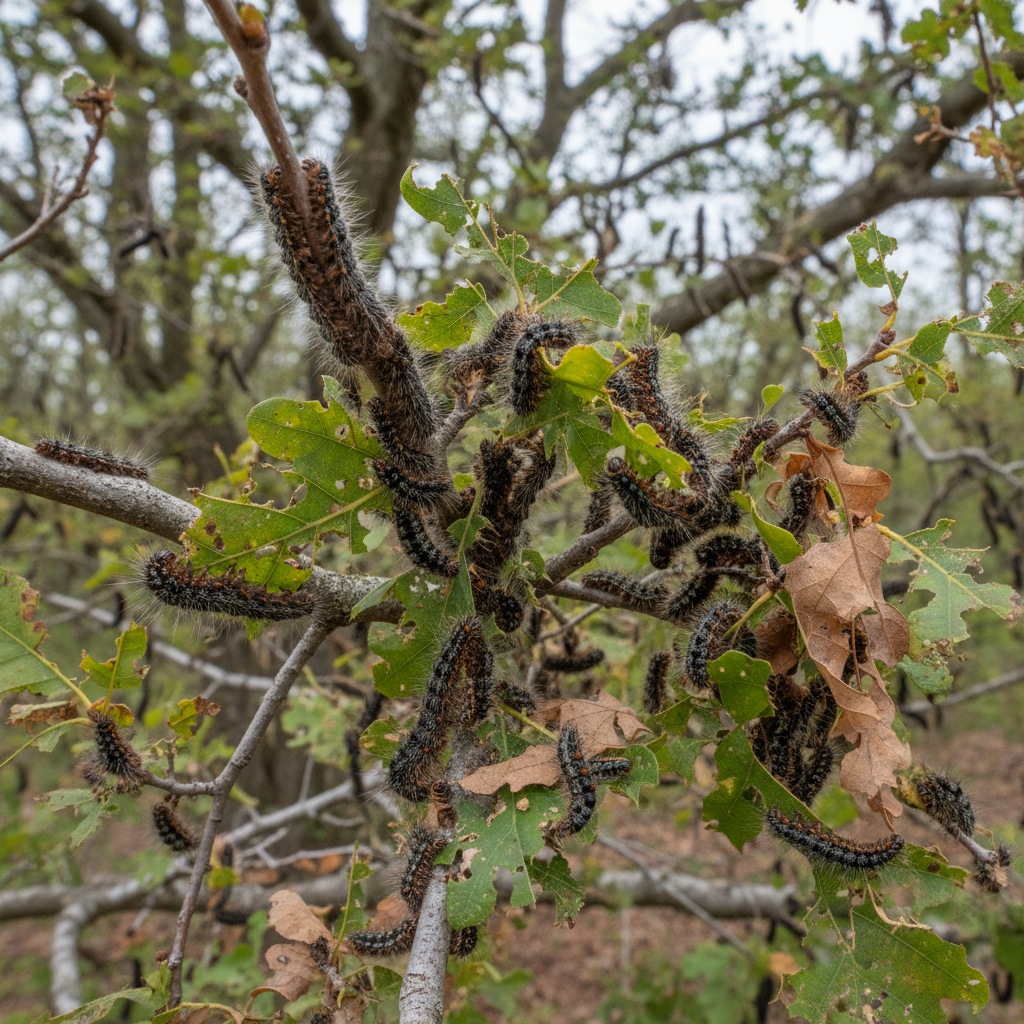
Defoliating Caterpillar
Spongy Moth (Lymantria dispar)
Host Plants
Oaks, aspens, birch, apple, and 300+ species
One of the most destructive defoliators in the eastern U.S. Caterpillar populations erupt cyclically, stripping entire oaks and other hardwoods bare within weeks. Repeated defoliation over multiple seasons can kill otherwise healthy trees.
Treatment
Biological controls including Bt spray in early caterpillar stage. Trunk banding to intercept larvae. Systemic trunk injections for high-value trees. Egg mass destruction in fall and winter.
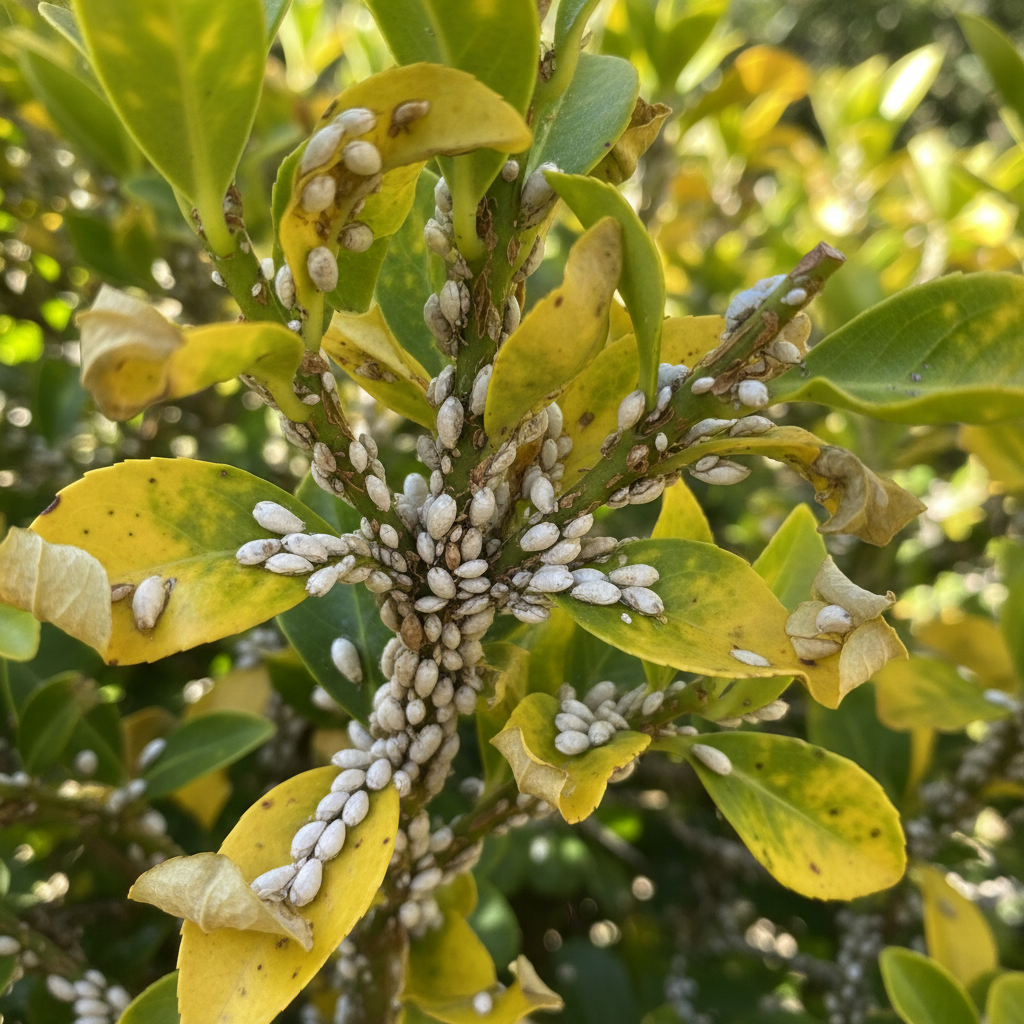
Sap-Feeding Insect
Euonymus Scale
Host Plants
Euonymus, pachysandra, bittersweet, celastrus
Armored scales that colonize stems and leaves of euonymus shrubs, causing yellowing, premature leaf drop, and dieback of heavily infested stems.
Treatment
Pruning heavily infested stems and applying horticultural oil in early spring. Follow-up systemic insecticide applications when crawlers emerge.
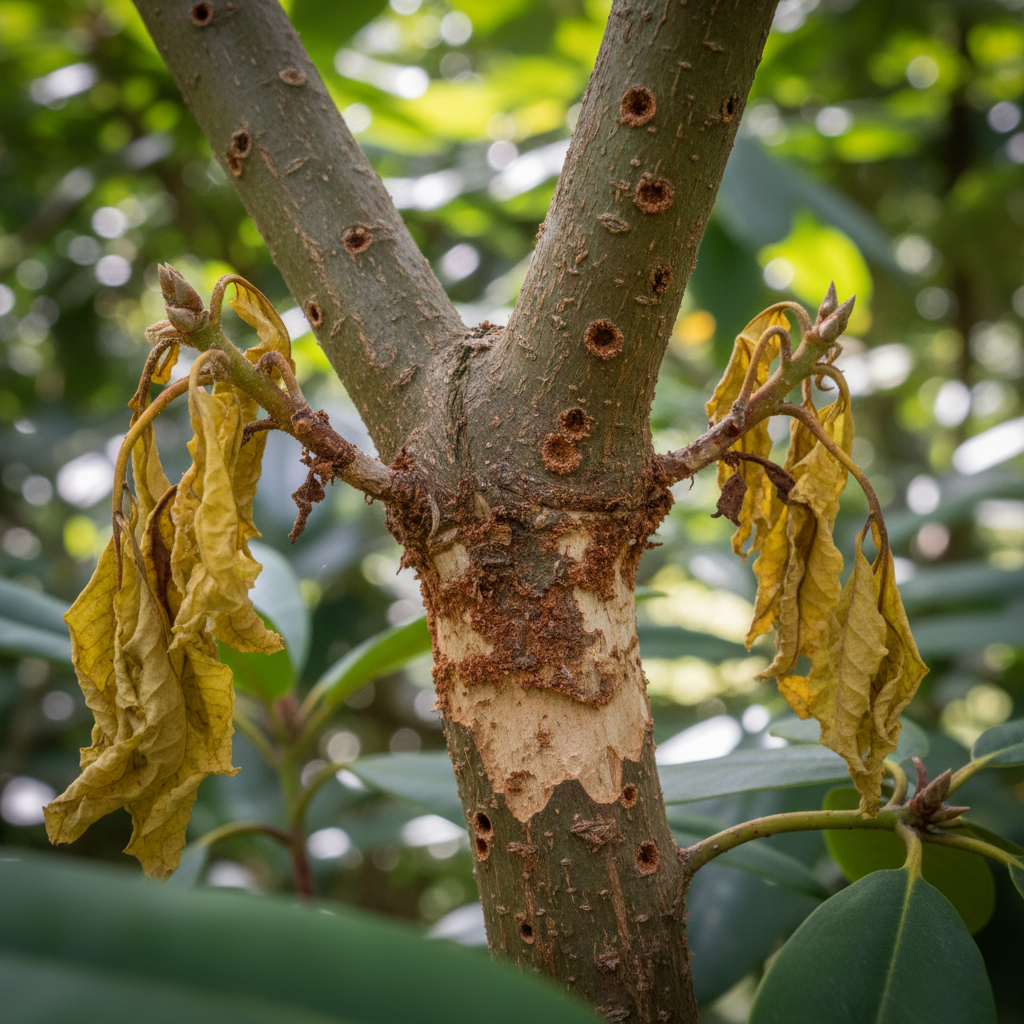
Wood-Boring Insect
Rhododendron Borer
Host Plants
Rhododendron, azalea, mountain laurel
Larvae of a clearwing moth that bore into the stems of rhododendrons and azaleas, causing wilting of individual branches ("flagging"), stem girdling, and plant death in severe cases.
Treatment
Preventive insecticide applications to stems in May when adults are active. Prune and destroy infested stems below the entry point. Reduce plant stress through proper irrigation.
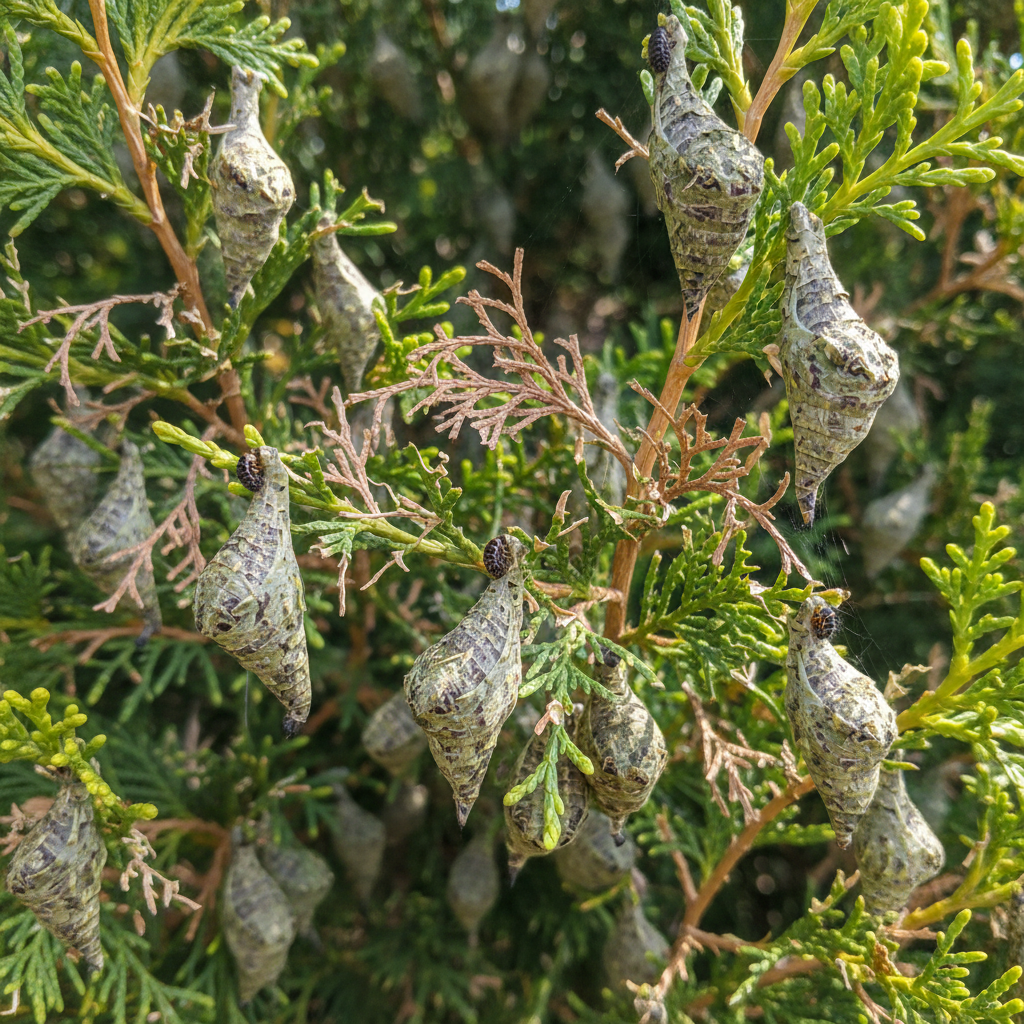
Defoliating Caterpillar
Bagworm
Host Plants
Arborvitae, juniper, spruce, pine, cedar
Caterpillars that construct spindle-shaped bags of foliage and silk, feeding on host needles through summer. Arborvitae and junipers can be killed in a single season during heavy infestations.
Treatment
Hand-remove bags in fall and winter to destroy overwintering eggs. Apply Bt or spinosad insecticide in early June when young caterpillars first hatch.
Defoliating Caterpillar
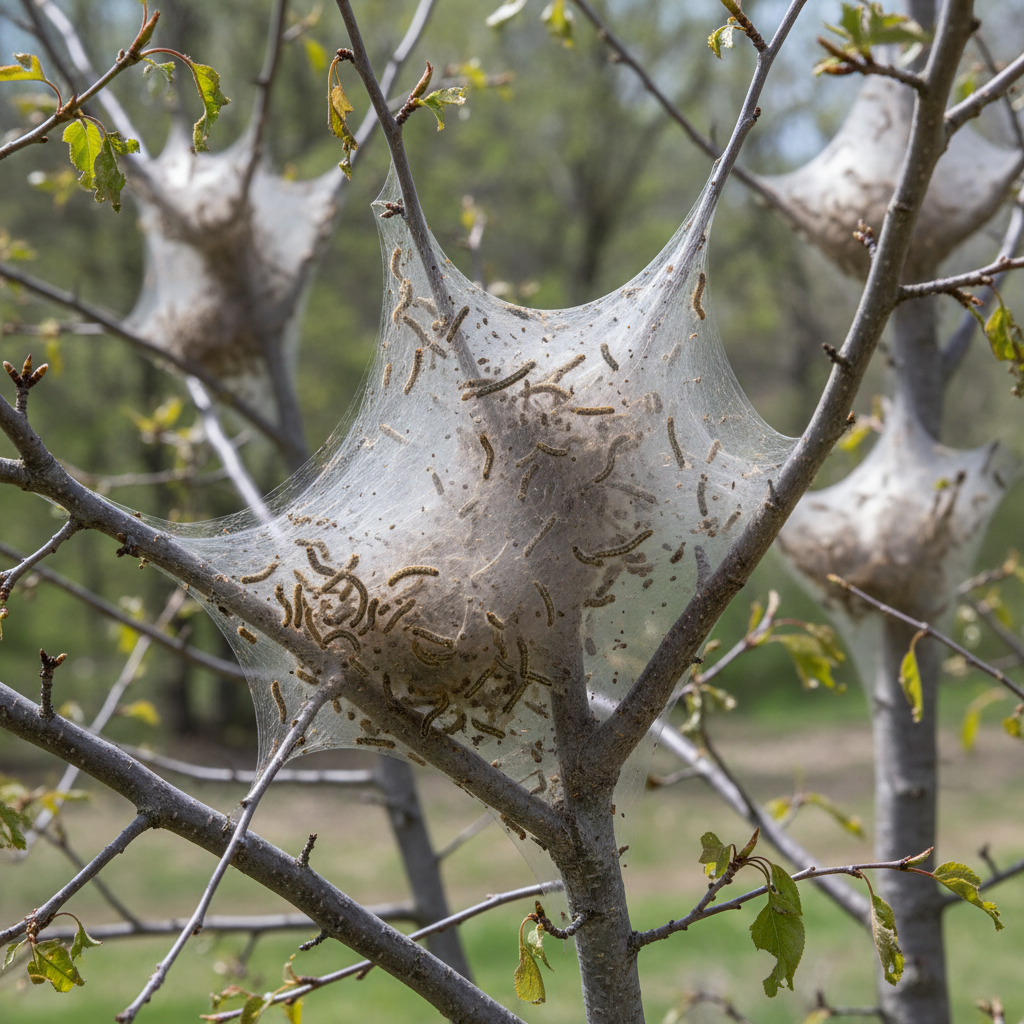
Eastern Tent Caterpillar
Host Plants
Wild cherry, crabapple, apple, hawthorn, serviceberry
Colonies of caterpillars that build distinctive silken tents in branch forks of cherry and apple family trees each spring. Heavy infestations can completely defoliate host trees, stressing them over multiple seasons.
Treatment
Remove and destroy silk tents by hand in early spring before caterpillars disperse. Apply Bt or spinosad insecticide when caterpillars are young and actively feeding.
Sap-Feeding Mite
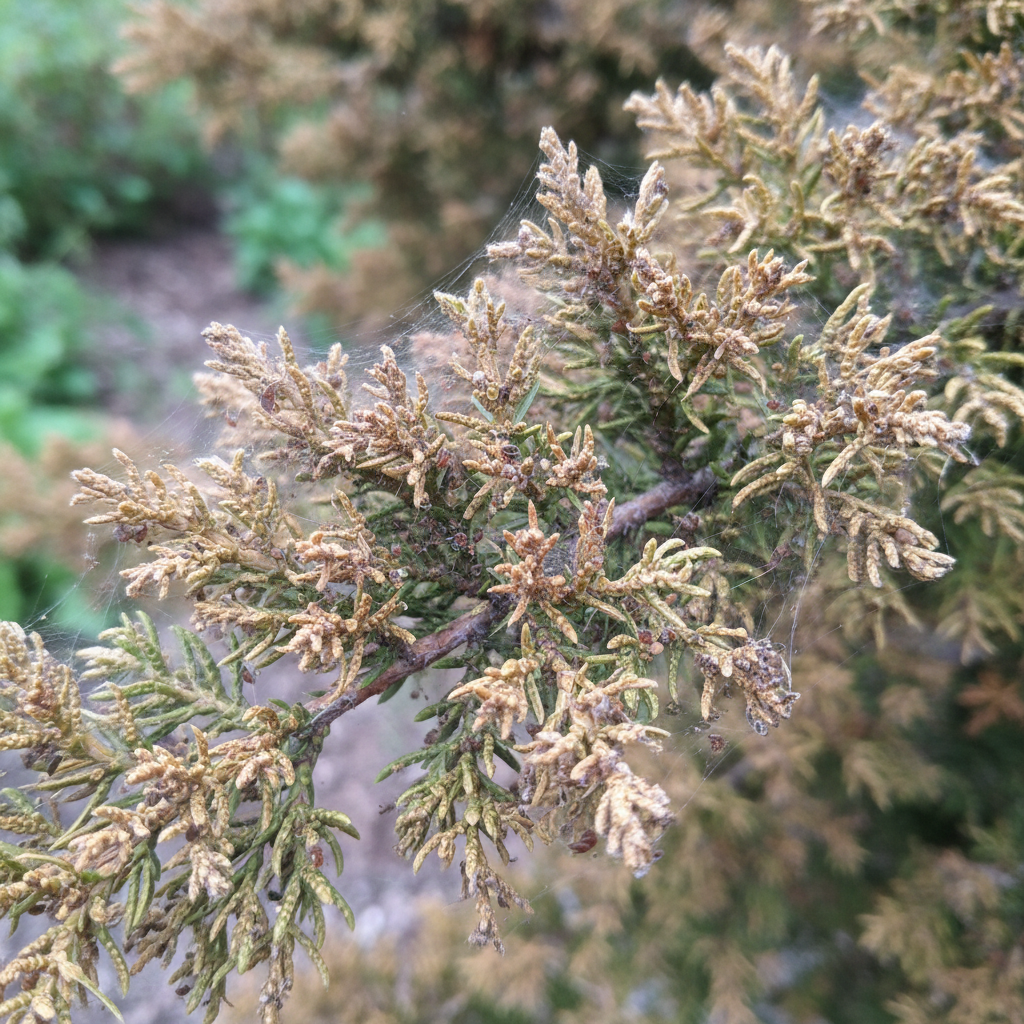
Two-Spotted Spider Mite
Host Plants
Junipers, arborvitae, spruces, crabapple, rose, many ornamentals
Microscopic mites that pierce leaf and needle cells to feed on plant fluids, causing stippling, bronzing, and premature defoliation. Populations explode in hot, dry summers.
Treatment
Horticultural oil or miticide applications when populations are detected. Avoid over-application of nitrogen fertilizers which increase mite reproduction.
Invasive Insect Pest
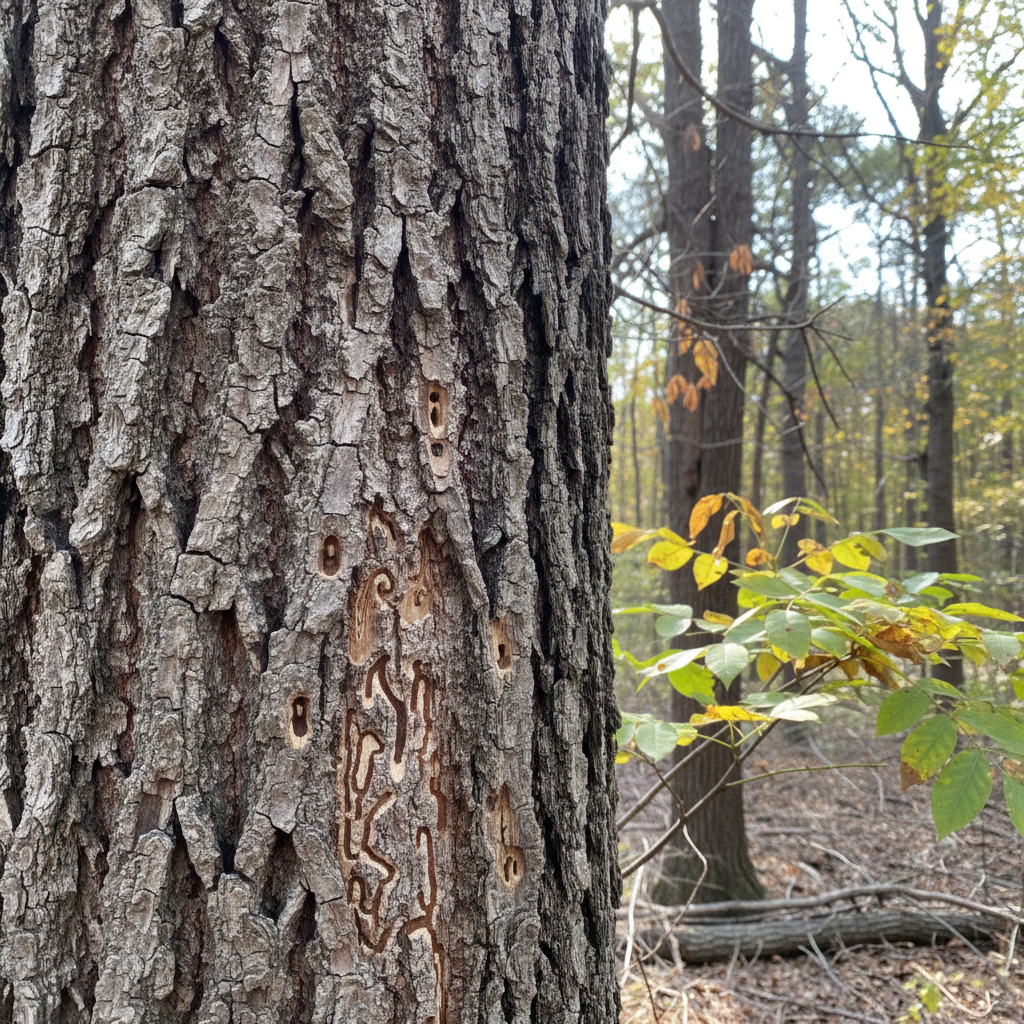
Emerald Ash Borer (EAB)
Host Plants
Ash trees (all species)
The most destructive forest insect in North American history. Signs include D-shaped exit holes in bark, canopy thinning from the top down, and epicormic sprouting. Ash trees showing more than 30–40% canopy loss are typically beyond treatment.
Treatment
Systemic trunk injection with emamectin benzoate provides 2-year protection. Treatment must begin before heavy canopy loss occurs.
Invasive Insect Pest
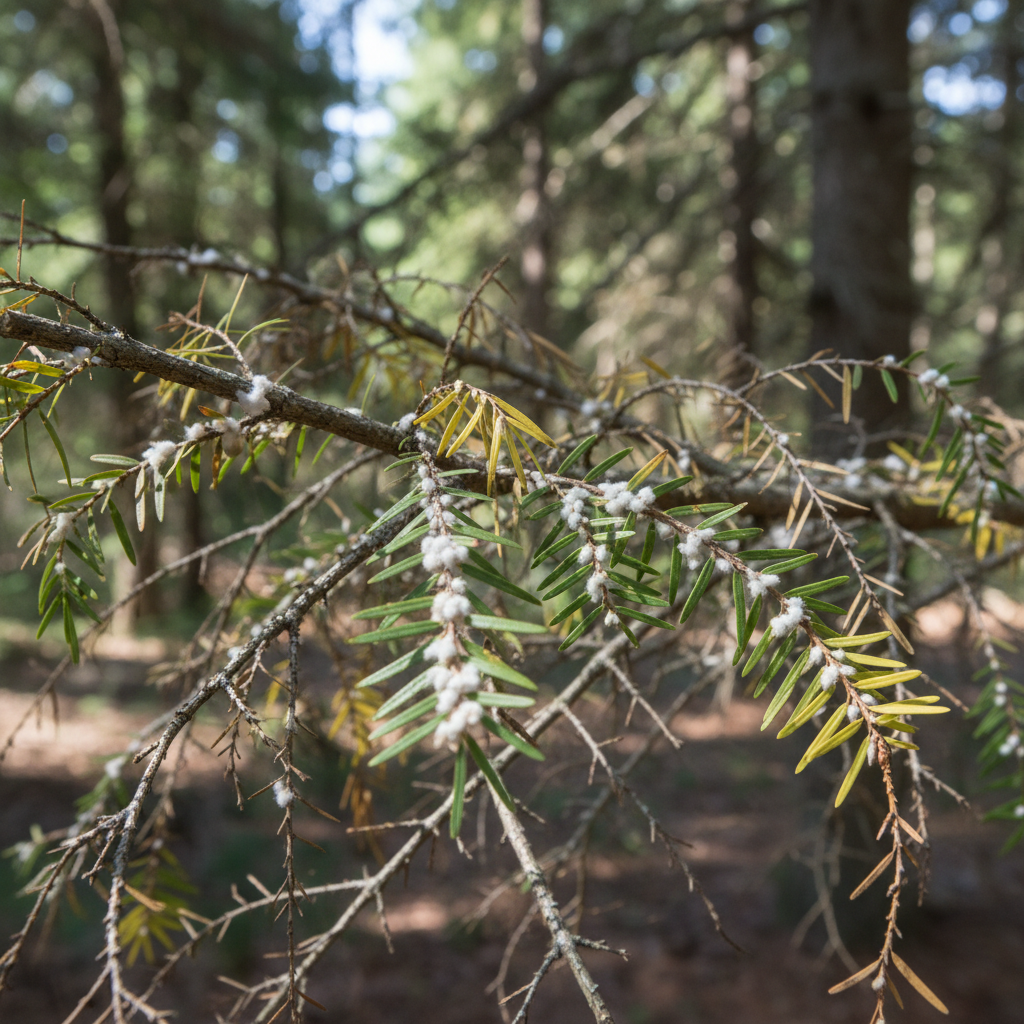
Hemlock Woolly Adelgid (HWA)
Host Plants
Eastern hemlock, Carolina hemlock
An invasive aphid-like insect that feeds on eastern hemlock sap, causing needle loss, branch dieback, and tree death within 5–10 years. Signs include white, cottony egg masses at branch axils.
Treatment
Systemic insecticide (imidacloprid) applied via soil drench or trunk injection provides multi-year control. Monitor hemlocks regularly and begin treatment before heavy needle loss.
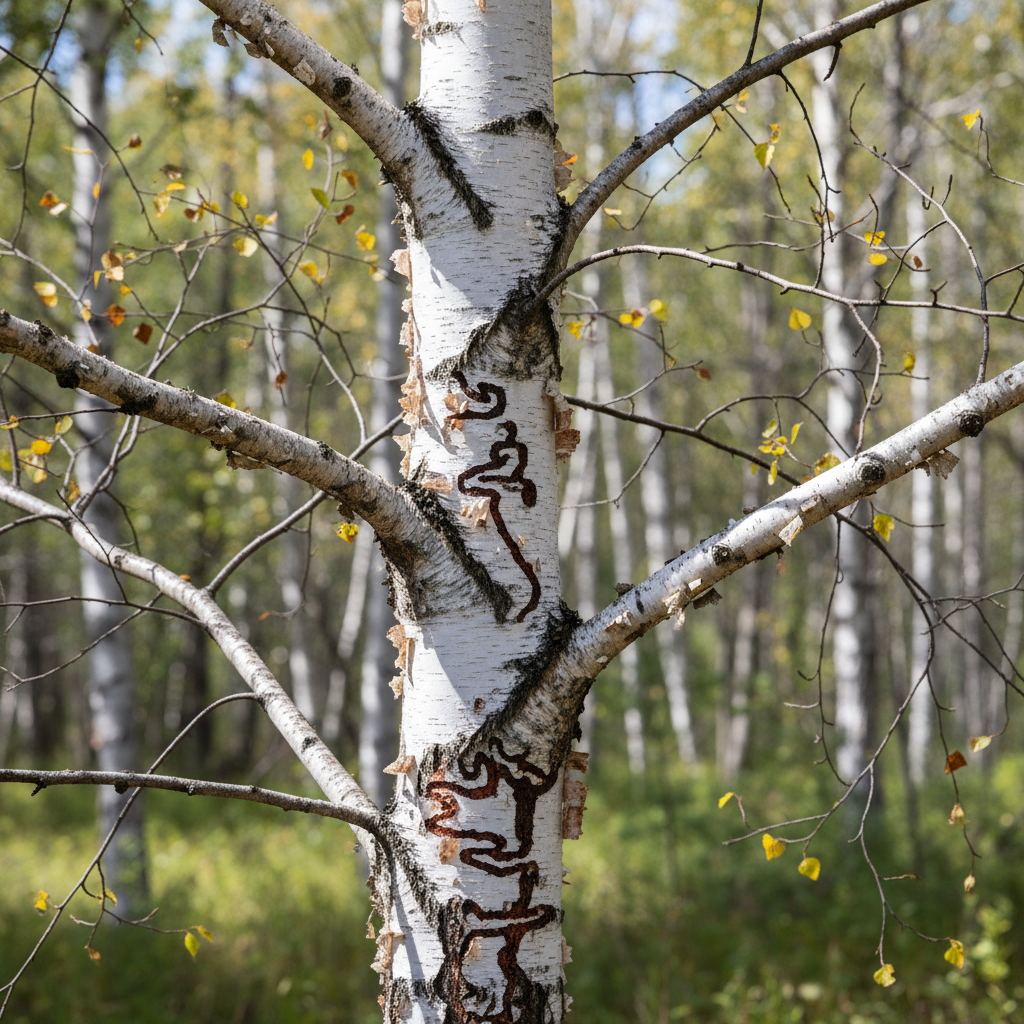
Insect Pest
Bronze Birch Borer
Host Plants
Birch trees (especially white and paper birch)
A secondary pest that attacks stressed birch trees. Larvae feed under the bark, creating serpentine galleries and girdling branches. Infestations often unnoticed until extensive canopy loss occurs.
Treatment
Preventive trunk injections with imidacloprid in spring provide 1–2 year protection. Adequate watering reduces stress and prevents secondary attacks.
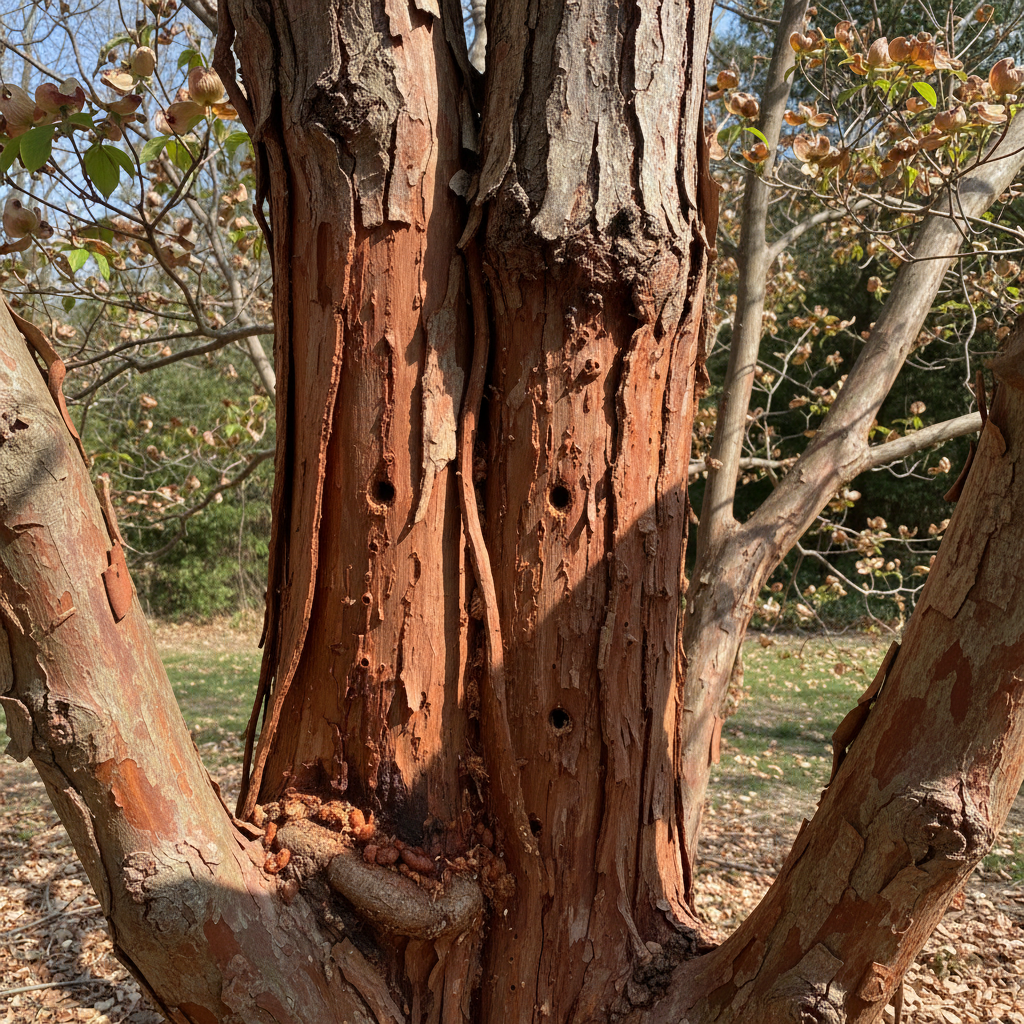
Wood-Boring Insect
Dogwood Borer
Host Plants
Flowering dogwood, birch, cherry, apple
A clearwing moth larva that bores into the base and lower trunk of dogwoods, causing crown dieback, bark splitting, and girdling. Wounds from lawn mower or string trimmer damage are primary entry points.
Treatment
Prevent mechanical wounds near the trunk base. Apply preventive insecticide sprays to the lower trunk in May through June.
Why Early Treatment Changes Everything
The difference between a treatable infection and a dead tree is often just one growing season. Lehigh Valley homeowners who invest in proactive plant health care protect decades of landscape value.
15+
Years of Growth
How long it takes boxwood hedges to reach maturity — one season of blight can undo that investment
4–6
Weeks to Death
How quickly oak wilt can kill a red oak after infection — treatment timing is everything
5–10
Years Unmanaged
Time to tree death from hemlock woolly adelgid without treatment — a fully preventable loss
30%+
Property Value
Estimated property value increase from healthy, mature trees and well-maintained ornamental plantings
The honest truth: Most tree and shrub diseases cannot be reversed once they've progressed beyond 30–40% canopy loss. Our certified arborists are trained to catch problems in their earliest, most treatable stages — before they become removal decisions.
Our Plant Health Care Program
A structured, science-based approach that treats the whole plant — from root zone to canopy — not just the visible symptoms.
01
Property Assessment
An ISA Certified Arborist walks your entire property, evaluating every tree and shrub for signs of stress, disease, pest activity, and structural issues. You receive a written report with findings and recommendations.
02
Soil Analysis & Amendment
Healthy plants start below ground. We test and amend soil pH with lime or sulfur, address compaction, and apply organic matter to create the root environment your trees and shrubs actually need.
03
Deep-Root Fertilization
Macro and micronutrients are injected directly into the root zone under pressure — bypassing surface competition from turf and delivering nutrition where it matters. Custom formulations based on species and soil test results.
04
Targeted Pest & Disease Treatment
Systemic insecticides, fungicides, dormant oils, and bactericides applied at the right time for each pest's life cycle. We treat the cause, not just the symptom — preventing re-infestation instead of chasing it.
05
Structural & Renewal Pruning
Crown cleaning, deadwood removal, and selective pruning to improve air circulation, reduce disease pressure, and maintain the shape and character of your specimen plants and hedges.
06
Ongoing Monitoring
We return on a scheduled basis throughout the growing season. Early detection of emerging issues prevents small problems from becoming expensive emergencies — and keeps your investment protected year-round.